1099 Requirements for Small Business (2026): Complete Guide
$600 threshold is now $2,000 for 2026. Learn 1099 requirements: 1099-NEC, W-9 rules, deadlines, filing.


If you paid a contractor, freelancer, or service vendor this year, the IRS probably expects a 1099 from you in January. Miss the deadline, file the wrong form, or skip a contractor who should have received one, and the penalties stack up fast — often more than the original payment itself.
For 2026, there’s one major update every small business owner needs to know: the 1099 reporting threshold increased from $600 to $2,000, effective for payments made in tax year 2026. That change — part of the One Big Beautiful Bill Act signed July 4, 2025 — reduces the number of 1099s many businesses must file, but it doesn’t reduce tax obligations for contractors who earn below that amount.
This guide walks through 1099 requirements for small business owners in plain language: who gets a 1099-NEC vs. a 1099-MISC, how the new $2,000 threshold works, how to collect W-9s the right way, the filing deadlines that actually matter, and the common mistakes that trigger IRS notices.
A quick caveat: This article is general information for small business owners, not tax advice. Tax thresholds, forms, and deadlines change. Verify current rules at IRS.gov and consult a CPA or tax professional for your specific situation.
What is a 1099 and why does it matter for small businesses?
A 1099 is an IRS information return — a form you send to both the IRS and a payee to report income that wasn’t paid through W-2 payroll. The IRS uses 1099s to cross-check what businesses report paying with what individuals report earning. When the numbers don’t match, audits follow.
For most small businesses, the form that matters is Form 1099-NEC (Nonemployee Compensation). It replaced Box 7 of the old 1099-MISC starting with tax year 2020 and is now the default form for paying independent contractors.
Examples of payments that typically require a 1099-NEC:
- A freelance graphic designer who built your logo
- An independent contractor who did electrical work on a job site
- A bookkeeper who isn’t your W-2 employee
- A virtual assistant invoiced through their own LLC
- A subcontractor on a construction project
You don’t issue a 1099 to W-2 employees (they get a W-2), and you typically don’t issue one for personal payments (paying the babysitter for your kids isn’t a business expense).
1099-NEC vs. 1099-MISC: clearing up the confusion
This is where most small business owners get tripped up. Before 2020, contractor payments went on the 1099-MISC. Now they go on the 1099-NEC. The 1099-MISC still exists — it just covers different categories.
Use 1099-NEC for:
- Payments to non-employees for services (the everyday case)
- Fees to independent contractors, freelancers, and subcontractors
- Commissions paid to non-employee salespeople
Use 1099-MISC for:
- Rents (e.g., paying a landlord for office or equipment rental)
- Royalties
- Prizes and awards
- Medical and healthcare payments
- Crop insurance proceeds
- Gross proceeds paid to attorneys (a specific carveout — legal fees for services still go on 1099-NEC)
If you pay your landlord $12,000 for office rent and your bookkeeper $4,800 for the year, you’d issue a 1099-MISC to the landlord and a 1099-NEC to the bookkeeper. Two different forms, two different filings.
When in doubt, the IRS Instructions for Forms 1099-MISC and 1099-NEC have category-by-category guidance.
The $2,000 threshold for 2026 (and the exceptions)
For payments made in tax year 2026, the general rule is: if you paid an unincorporated contractor $2,000 or more for services during the year, you must issue a 1099-NEC.
This is a significant change from the $600 threshold that applied for tax years 2025 and earlier. The One Big Beautiful Bill Act, signed July 4, 2025, raised the threshold for the first time since 1954. Starting with tax year 2027, the $2,000 figure will be adjusted annually for inflation.
That number includes the full year, across all payments. Pay one freelancer $1,100 in March and $1,000 in October, and you’ve crossed the threshold — both payments combined are reportable.
A few important nuances:
- Per business, not per project. The $2,000 is total annual payments from your business to that contractor.
- Services only counts toward the NEC threshold. Buying inventory from a sole proprietor doesn’t trigger a 1099-NEC.
- Payments to corporations are usually exempt (with notable exceptions like attorneys and medical providers — see next section).
- Payment method matters. Payments made via credit card, debit card, or third-party payment networks (PayPal, Stripe, Venmo for business, etc.) are reported by the payment processor on Form 1099-K, not by you. Don’t double-report.
- State thresholds may differ. Some states haven’t adopted the $2,000 federal threshold and still require 1099s at $600. Check your state’s department of revenue.
- Income below $2,000 is still taxable. The threshold determines your filing obligation, not the contractor’s tax liability.
- Always verify on IRS.gov before each tax season — the threshold adjusts for inflation starting 2027.
Who you don’t issue a 1099 to
- C corporations and S corporations (with exceptions for attorneys, medical/healthcare providers, and gross proceeds paid to attorneys)
- Sellers of merchandise, freight, storage, and similar
- Anyone paid via credit card or third-party network (they get a 1099-K from the processor)
- Employees on payroll (they get a W-2)
- Tax-exempt organizations in most cases
Who you do issue one to (even if you’d rather not)
- LLCs that are taxed as sole proprietorships or partnerships (most single-member LLCs)
- Sole proprietors and freelancers operating under their own name or a DBA
- Partnerships
- Attorneys and law firms — even if incorporated — for legal services
- Medical and healthcare providers — even if incorporated
Understanding your own business structure — and your contractors’ — is key here. If you’re unsure how different entity types are taxed, this guide to business structure types explains the LLC, sole proprietor, and S-Corp distinctions that affect 1099 obligations.
Step 1: Collect W-9s before you pay anyone
The single biggest favor you can do yourself is to collect a completed Form W-9 from every contractor before you cut their first check. Not after. Not in January. Before.
The W-9 captures:
- Legal name (and business name, if different)
- Federal tax classification (sole proprietor, LLC, S-corp, etc.)
- Address
- Taxpayer Identification Number (SSN or EIN)
- A signature certifying the information is accurate
Why front-load this:
- You can’t file an accurate 1099 without a TIN. Chasing W-9s in January from contractors you haven’t talked to in eight months is a special kind of misery.
- The W-9 tells you whether to issue a 1099 at all. A vendor who marks “C corporation” on their W-9 is generally exempt (outside attorney/medical exceptions).
- No W-9? Backup withholding kicks in. If a contractor refuses to provide a TIN, the IRS requires you to withhold a percentage of their payments and remit it. Verify the current backup withholding rate at IRS.gov.
- The $2,000 threshold change doesn’t eliminate the W-9 requirement. There is no IRS rule tying W-9 collection to a dollar threshold — collect them regardless of how much you expect to pay.
Make “send a W-9, signed contract, and first invoice” a hard-gate before issuing any payment to a new contractor. Save the W-9 with your accounting records — you don’t file it with the IRS, but you need it on hand for at least four years per IRS recordkeeping guidance. For a complete document retention schedule, see how long to keep business records.
Download the current Form W-9 directly from IRS.gov/FormW9.
Step 2: Track contractor payments throughout the year
The hardest part of 1099 season isn’t the filing itself — it’s reconstructing payment totals from a year of receipts, bank statements, and Venmo screenshots.
Three habits that make January painless:
1. Pay contractors from a dedicated business account. Mixing personal and business payments turns reconciliation into a forensic project.
2. Tag every contractor payment with a category and recipient. Whether you’re using accounting software, a spreadsheet, or pen-and-paper, every check or transfer should be tied to a vendor and a category. “Office expense — Maria, bookkeeper” beats “$425.” A well-organized chart of accounts for your small business makes this categorization consistent year-round.
3. Keep your invoice records together. Contractors who invoice you provide a clean audit trail — invoice number, services, date, amount. If you’re using an invoicing tool that captures vendor payments, you can export a year-end report by contractor in seconds.
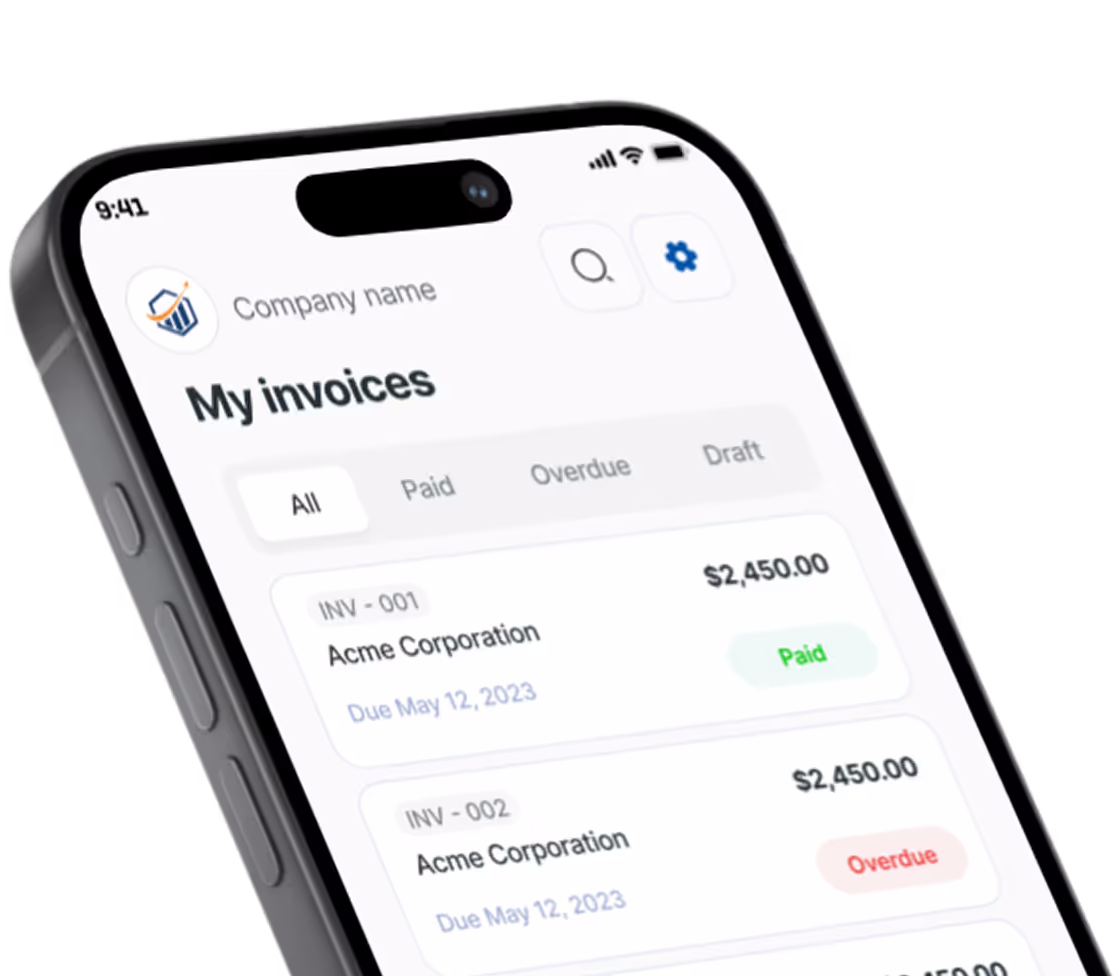
This is where Pronto Invoice fits in. If you’re sending and receiving invoices through Pronto, your contractor payment history is already structured by vendor and date. When you need to total what you paid the cleaning subcontractor across all of last year, it’s an export — not an archaeology dig.
Step 3: Choose how you’ll file
You have two main filing paths: paper or electronic.
Electronic filing (recommended)
The IRS strongly encourages electronic filing, and businesses filing 10 or more information returns in aggregate are required to file electronically under current IRS rules. (The threshold dropped from 250 to 10 a few years ago — verify the current rule on IRS.gov for your filing year.)
The IRS’s free electronic filing system for information returns is the Information Returns Intake System (IRIS). It’s free and lets you key in or upload 1099s directly. Many small business owners use IRIS once they outgrow paper.
You can also file electronically through:
- Your accounting software (most modern systems include 1099 e-file)
- A dedicated 1099 service (Track1099, Tax1099, efile4Biz, and similar)
- Your CPA or tax preparer
- The IRS FIRE system (older alternative to IRIS)
Electronic filing means you skip Form 1096 (the transmittal form for paper filings), and confirmations come back faster.
Paper filing
If you’re filing fewer than 10 information returns total, paper is still allowed. You’ll need:
- Original red-ink IRS forms (you can’t print these from a regular printer — order from IRS.gov or pick them up from an office supply store)
- Form 1096, the transmittal summary that goes with paper 1099s
- The mailing address for the IRS center serving your state (listed in the 1099 instructions)
Don’t print 1099s off your printer and mail them to the IRS — the official scannable Copy A must be the red-ink form. You can print the recipient’s copy on plain paper.
Step 4: Hit the deadlines
For 1099-NEC, the deadlines are unusually tight compared to other tax forms:
- January 31 — Recipient copies must be sent (mailed or delivered)
- January 31 — IRS filing deadline (whether paper or electronic)
For 1099-MISC, the recipient copy is also due January 31, but the IRS filing deadline is later — typically February 28 (paper) or March 31 (electronic). Confirm exact dates each year on IRS.gov.
A few more deadline notes:
- If a deadline falls on a weekend or federal holiday, it shifts to the next business day.
- Extension requests use Form 8809, but extensions for 1099-NEC are limited and not automatic. Plan to file on time rather than relying on extensions.
- State 1099 filing requirements are separate. Many states participate in the Combined Federal/State Filing Program — your filing service typically handles this — but some states (California, Massachusetts, Pennsylvania, others) have their own requirements. Check your state’s department of revenue.
Penalties for missing or late 1099s
The IRS scales penalties based on how late the form is filed and whether the failure was intentional. For 2026 filings, penalties range from $60 to $340 per form for non-intentional failures, and $680 per form (no cap) for intentional disregard. Verify exact dollar amounts each year at IRS.gov.
Here’s how the tiers work:
- Filed within 30 days of the due date — smallest per-form penalty
- Filed by August 1 — moderate per-form penalty
- Filed after August 1 or not filed at all — largest per-form penalty
- Intentional disregard — substantially higher penalty, with no maximum cap
These penalties apply per form, both for the recipient copy and the IRS copy — so a single missed 1099 can trigger two penalties. Multiply by 10 contractors, and a small oversight becomes a five-figure problem.
The IRS may waive penalties if you can show reasonable cause — but that’s a discretionary call, not a guarantee. Filing on time is cheaper than filing a penalty abatement letter.
Common 1099 mistakes small business owners make
After years of small business owners running this gauntlet, the same mistakes repeat:
1. Still using the $600 threshold for 2026 payments. The threshold is $2,000 for tax year 2026 and beyond. Issuing unnecessary 1099s isn’t illegal, but it creates extra paperwork for you and your contractors. Update your tracking cutoff accordingly.
2. Mixing up 1099-NEC and 1099-MISC. Contractor services on 1099-NEC. Rent and royalties on 1099-MISC. Legal fees for services on 1099-NEC. Gross proceeds to attorneys (settlements, etc.) on 1099-MISC.
3. Skipping incorporated LLCs without checking the W-9. A single-member LLC taxed as a sole proprietor does get a 1099. Only entities taxed as C-corps or S-corps are generally exempt — and even then, attorneys and medical providers are exceptions.
4. Issuing a 1099 for credit-card payments. Don’t. The credit card processor reports those on a 1099-K. Issuing a 1099-NEC for a payment you made on your business credit card double-reports the income and confuses everyone.
5. Forgetting subcontractors on a job. If you ran a project where a subcontractor invoiced you for $3,000 in framing labor, that’s a 1099 — even if you billed your client for the same amount as a pass-through.
6. Using the wrong TIN. A name/TIN mismatch generates a CP2100 notice from the IRS and can trigger backup withholding requirements going forward. The W-9 is your defense — collect it, keep it.
7. Filing late and hoping no one notices. The IRS notices.
8. Forgetting state filings. Federal e-filing through the Combined Federal/State Filing Program covers some states automatically. Others require separate state filings — and some states haven’t adopted the $2,000 federal threshold, so you may still owe state 1099s for contractors you paid between $600 and $2,000.
9. Issuing a 1099 to an employee. If the worker is actually an employee under IRS rules (you control how, when, and where they work; provide tools; set hours), they should be on payroll with a W-2 — not a 1099. Misclassification penalties dwarf 1099 penalties.
Your printable 1099 filing checklist for 2026
Use this as a January cheat sheet. Print it, tape it to the wall, work through it.
Throughout the year
- Collect a completed Form W-9 from every contractor before issuing the first payment
- Set up backup withholding for any contractor who refuses to provide a TIN
- Tag every contractor payment in your accounting system with the vendor name and category
- Pay contractors from a dedicated business account (not personal)
- Keep digital copies of all W-9s, contracts, and invoices
By December 31
- Run a year-to-date contractor payment report
- Identify everyone you paid $2,000 or more for services (2026 threshold)
- Note contractors you paid $600–$1,999 — no federal 1099 required, but check your state rules
- Cross-check W-9 records — chase down any missing ones now, not in January
- Note any contractors paid by credit card or third-party processor (you do NOT issue 1099s to them)
- Confirm whether each vendor needs a 1099-NEC or 1099-MISC
By January 15
- Choose your filing method (electronic via IRIS, accounting software, 1099 service, or paper)
- Order paper forms from IRS.gov if filing on paper (allow shipping time)
- Verify all TINs against W-9s
- Confirm legal names match the W-9 exactly (a “Maria Garcia LLC” is different from “Maria Garcia”)
By January 31
- Send recipient copies (Copy B) by mail or electronic delivery (with consent)
- File Copy A with the IRS (electronically via IRIS or your filing service; paper if eligible)
- Save filing confirmations in your records
- Mail Form 1096 with paper filings (electronic filers skip this)
By state deadlines (varies)
- File any required state copies — check your state department of revenue
Year-round records to keep (4+ years)
- All W-9s
- All 1099 copies you issued
- Filing confirmations
- Contractor invoices and payment records
How clean invoice records make 1099 season easier
The hardest part of January isn’t filling out the form — it’s figuring out who got paid what.
If your contractor payments are scattered across personal Venmo, business checking, two credit cards, and a stack of paper receipts, you’re starting from zero every January. If they’re flowing through a single invoicing system that captures vendor, date, amount, and category for every transaction, you’re starting from a CSV export.
Pronto Invoice keeps your business invoices and payments organized by vendor and date. When January arrives, you can pull a year of contractor payments by vendor and category in a few taps — totals, dates, payment methods, and notes — to feed straight into your 1099 prep. No archaeology, no missed contractors, no mystery payments.
Try Pronto Invoice and walk into next tax season with the records already in order.
Frequently asked questions about 1099 requirements
What is the 1099 threshold for 2026?
For tax year 2026, the threshold is $2,000. The One Big Beautiful Bill Act, signed July 4, 2025, raised the 1099-NEC and 1099-MISC reporting threshold from $600 to $2,000 — the first increase since 1954. Starting in 2027, the threshold adjusts annually for inflation. Note: income below $2,000 is still taxable to the contractor; the threshold only affects your filing obligation. Some states may still require 1099s at the old $600 threshold, so check your state’s rules.
Do I need to send a 1099 to my LLC contractor?
Usually yes. Most LLCs are taxed as sole proprietorships or partnerships, and those receive 1099s. Only LLCs that have elected to be taxed as C-corps or S-corps are generally exempt — and you’ll know from the contractor’s W-9. When in doubt, ask for the W-9 and let it answer.
What if I forgot to collect a W-9?
Send Form W-9 to the contractor immediately and request a return. If they refuse or ignore the request, IRS rules require you to begin backup withholding on future payments and remit the withheld amount to the IRS. This is one of many reasons to collect W-9s upfront.
Do I need to issue a 1099 if I paid via PayPal or Venmo?
If you paid through a third-party network’s business function (which generates a 1099-K), no — the platform reports it. If you paid via personal Venmo or a friends-and-family option, then technically you may still owe a 1099-NEC if payments totaled $2,000 or more. The IRS has tightened 1099-K thresholds in recent years, so verify current 1099-K rules on IRS.gov.
What’s the difference between a 1099 and a W-2?
A W-2 reports wages paid to employees, with taxes withheld and remitted by the employer. A 1099 reports payments to non-employees (contractors), with no taxes withheld — the contractor handles their own taxes. Misclassifying an employee as a contractor (1099 instead of W-2) is a serious IRS issue with significant penalties.
Can I file 1099s myself, or do I need an accountant?
You can absolutely file them yourself, especially if you’re under 10 forms total. Tools like the IRS’s IRIS portal make e-filing free. For higher volume or complex situations, a CPA or 1099 filing service is worth the modest fee.
What if I make a mistake on a 1099 I already filed?
File a corrected 1099 marked “Corrected” — both with the IRS and to the recipient. Fix it as soon as you notice; penalties for corrections filed promptly are usually minimal compared to letting the error stand.
Are there state 1099 filing requirements too?
Often yes. The Combined Federal/State Filing Program forwards federal data to participating states automatically — most filing services handle this — but some states (California, Massachusetts, Pennsylvania, and others) have their own rules. Critically, some states have not adopted the new $2,000 federal threshold and still require 1099s at $600. Check your state’s department of revenue.
Final word
The 1099 system isn’t designed to trip you up — it’s designed to make sure contractor income gets reported accurately. Once you have a habit of collecting W-9s upfront, tagging contractor payments throughout the year, and tracking the current threshold (now $2,000 for federal filings starting in 2026), the actual January filing is the easy part.
Set the habit. Use the checklist. Verify thresholds and deadlines on IRS.gov every year, since the rules do shift. And when in doubt about your specific situation, talk to a tax professional — the cost of a one-hour consultation is a fraction of a single late-filing penalty.
This article is general educational information for small business owners and is not a substitute for professional tax advice. Tax rules and thresholds change. Confirm current IRS guidance at IRS.gov and consult a qualified tax professional or CPA for advice specific to your business.
There is always something more to read

10 Steps to Set Up a Small Business: The Complete Startup Checklist for 2025
Learn 10 steps to set up a small business with this checklist covering LLC, banking, invoicing, insurance, and pricing.

How to Accept Payments Online
No website needed. Here is how to start accepting online payments as a small business — processors, payment links, and invoicing in one afternoon.

Accounts Receivable Aging Report: What It Is and How to Use It
What aging buckets mean, how to build the report, read patterns, and pick the right collection action at each age.