Bill of Lading 101: Small Business Guide
Learn what a bill of lading is, the types you'll actually use, required fields, common mistakes, and how it connects to your invoice.


You’ve got a pallet of HVAC units headed across the state to a job site, and the freight carrier’s driver is standing at your shop with a clipboard, waiting for paperwork. He needs the bill of lading before he loads anything. If that document is wrong, incomplete, or unsigned, you’re the one eating the cost when something goes sideways.
A bill of lading is one of those documents you can’t ship freight without, but most small business owners never get a straight explanation of what it does. This guide fixes that. You’ll learn what a bill of lading actually is, the three types you’ll realistically use, the fields that matter, the mistakes that cost real money, and how it connects back to the invoice you send your client.
What Is a Bill of Lading?
A bill of lading (BOL) is the legal document that travels with your freight from pickup to delivery. It does three jobs at once:
- Receipt of goods — proof the carrier picked up what you said they did, in the condition you described.
- Contract of carriage — the agreement between you and the carrier covering how the freight gets hauled and who’s liable if it’s damaged or lost.
- Document of title — in some cases, it establishes who owns the goods and who can claim them at the other end.
That third role is why a BOL is more than a glorified packing list. It’s a binding document. If a load shows up damaged and your BOL says the carrier received it in good condition, you’ve got a paper trail. If it’s vague, you’ve got a problem.
When you actually need one: any time you move freight by truck (full truckload or less-than-truckload), rail, ocean, or air. If you’re shipping a pallet, a crate, or anything that rides on a commercial carrier, you need a BOL.
When you don’t: small parcels through UPS, FedEx, or USPS. Those services use their own shipping labels and tracking systems, so a separate BOL isn’t required. The line is roughly the parcel-versus-freight divide: if it’s heavy enough to need a pallet jack, it needs a bill of lading.
For context on why this matters at scale: trucks moved 72.7% of US freight by weight in 2024, according to the American Trucking Associations. And 91.5% of motor carriers run 10 or fewer trucks. So if you’re an owner-operator or a contractor shipping freight, you’re working with small carriers who live and die by accurate paperwork.
The 3 Most Important BOL Types for Small Businesses
There are eight-plus types of bills of lading if you read the textbook version. You don’t need most of them. For a small business shipping domestic freight, three cover nearly everything.
1. Straight Bill of Lading
This is the one you’ll use 90% of the time. A straight BOL is nonnegotiable and names a specific consignee (the receiver). The goods can only be delivered to that named party. You’d use this when you’ve already been paid, or when you’re shipping to a client who’s a known, fixed destination, like a contractor sending materials to a job site.
If you’re not sure which type you need, it’s almost certainly this one.
2. Through Bill of Lading
A through BOL covers a shipment that travels in multiple legs, sometimes with more than one carrier or mode of transport, under a single document. If your freight gets picked up by a local carrier, transferred to a long-haul line, then handed to a final-mile delivery service, a through BOL keeps it all under one agreement instead of forcing you to manage three separate documents.
You’ll see this on longer hauls and anything involving a transfer point.
3. Hazmat Bill of Lading
If you ship anything classified as a dangerous good, paint, solvents, propane, lithium batteries, certain chemicals, you need a hazmat BOL with the proper shipping name, hazard class, and identification number. This isn’t optional. Missing or incorrect hazmat documentation gets your freight rejected at pickup and can expose you to regulatory penalties.
Contractors and trades shipping these materials need to flag them correctly every single time. There’s no judgment call here.
What to Include on Your Bill of Lading (10 Required Fields)
Whether you’re filling out a paper form or an electronic BOL, these ten fields need to be complete and accurate. A few of them trip people up, so I’ve flagged the ones that matter most.
- Shipper name, address, and contact — who’s sending it (you).
- Consignee name, address, and contact — who’s receiving it. Double-check this. A wrong address here is one of the most expensive mistakes you can make (more on that below).
- Carrier information — the company hauling the freight.
- Pickup date and expected delivery date — sets the timeline everyone’s accountable to.
- Description of goods — be specific. Write “electrical panel,” not “equipment.” Vague descriptions limit what you can claim if something gets damaged.
- Weight and dimensions — carriers price and classify off these numbers, so get them right.
- Packaging type and number of units — pallets, crates, boxes, and how many.
- Freight class (NMFC code) — this determines your shipping cost. Misclassify it and you’ll get hit with reclassification fees.
- Hazmat designation — required if any item is a dangerous good. Leave it off when it applies and your freight gets rejected.
- Signature lines — shipper, carrier, and receiver. Unsigned BOLs are where claims fall apart.
The three that cause the most expensive errors are the consignee address, the freight class, and the goods description. Slow down on those.
BOL vs. Invoice vs. Packing Slip: What’s the Difference?
These three documents travel together and get confused constantly. Here’s the clean version:
| Document | What it does | Who it’s for |
|---|---|---|
| Bill of lading | Legal contract and receipt for moving freight | You and the carrier |
| Invoice | The bill for what your client owes | Your client |
| Packing slip | Itemized list of what’s inside the shipment | The receiver, to check the order |
The BOL governs the transportation. The invoice gets you paid. The packing slip lets the receiver confirm they got everything. Different jobs, different audiences.
If you want to go deeper on the difference between shipping documents and billing documents, see our guide on packing slips vs. invoices. And if you’re an owner-operator billing freight runs, the trucking invoice template breaks down how to bill the haul itself.
5 BOL Mistakes That Cost Small Businesses Money
Every item on this list has a real dollar consequence. None of them are theoretical.
Vague description of goods. Writing “machine parts” instead of “stainless steel valve assembly” caps the carrier’s liability if the freight is damaged. Your claim gets reduced to a generic per-pound rate, and you eat the difference.
Wrong freight class. Pick the wrong NMFC code and the carrier reclassifies your shipment after the fact. That means a reclassification fee, typically $25 to $150 or more per incident, plus the higher freight charge you should’ve paid in the first place.
Wrong or incomplete consignee address. If the freight can’t be delivered as written, you’ll get hit with a reconsignment fee to redirect it, plus the delay while it sits at a terminal. On a tight job-site timeline, that delay can cost more than the fee.
Signing “received in good condition” when it wasn’t. If you sign off on a delivery BOL without inspecting the freight and then find damage, your cargo claim gets denied. Note any visible damage on the BOL before you sign. Once you sign clean, you’ve accepted the goods as-is.
Missing hazmat designation. Forget to flag a dangerous good and the carrier can reject the load at pickup, blowing your schedule. Worse, you’re exposed to regulatory penalties for improper shipping documentation.
How Your BOL Connects to Your Invoice
Here’s the full workflow, start to finish:
- You send your client an invoice for the goods or job.
- You ship the freight with a bill of lading.
- The carrier delivers, and the receiver signs the delivery BOL.
- That signed BOL is your proof of delivery, which supports getting paid on the invoice.
The thread that ties it all together is the BOL number. When you put the BOL number on your freight invoice, anyone who needs to, your client, your bookkeeper, the carrier, can trace a single shipment from the bill all the way to the signed delivery receipt. No guessing which load matches which invoice.
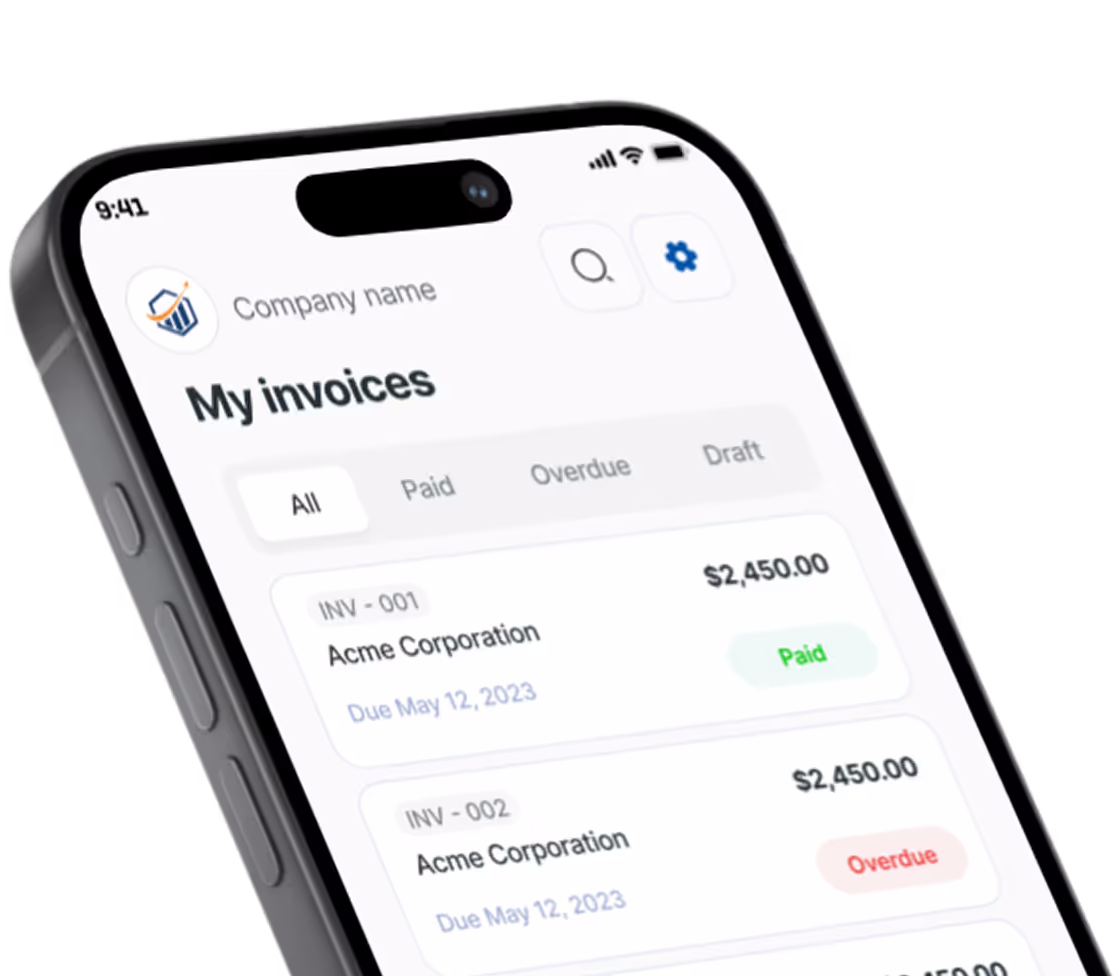
This is where a little setup saves you headaches. With Pronto Invoice, you can add custom fields to your invoices, so you can drop the BOL number right on the freight invoice you build from your phone before leaving the job site. Your invoice and your bill of lading stay connected, and if a client questions a charge, you’ve got the BOL number sitting right there to pull the delivery record.
For related billing details, the guide on what a PO number is on an invoice covers another reference number worth tracking the same way.
Before You Ship: A Quick BOL Checklist
Pull this up on your phone at the loading dock. Three stages, short enough to run through fast.
Before pickup:
- Goods described specifically (not “equipment” or “parts”)
- Weight, dimensions, and unit count confirmed
- Freight class (NMFC code) verified
- Consignee name and address double-checked
- Hazmat flagged if it applies
At pickup:
- Carrier information filled in
- Pickup date recorded
- Shipper and carrier signatures captured
- You keep a copy (paper or digital)
At delivery:
- Receiver inspects freight before signing
- Any visible damage noted on the BOL
- Receiver signs the delivery BOL
- Signed copy saved as proof of delivery
FAQ
Do I need a BOL for every shipment? For every freight shipment, yes, anything moving by truck, rail, ocean, or air on a commercial carrier. You don’t need a separate BOL for small parcels through UPS, FedEx, or USPS, since those use their own labels and tracking.
What’s the difference between a BOL and a packing slip? A bill of lading is the legal contract and receipt between you and the carrier for moving the freight. A packing slip is just an itemized list of what’s inside the shipment so the receiver can check the order. The BOL governs transport; the packing slip confirms contents.
How long should I keep my BOLs? Hold onto them for at least a few years. They’re your proof of delivery and your backup for cargo claims, tax records, and any dispute over what shipped and when. Many businesses keep them three to seven years alongside other financial records. Digital copies make this painless.
Can I use a digital bill of lading? Yes. Electronic bills of lading (eBOLs) are mainstream now, with carriers and shippers using them routinely. A digital BOL holds the same legal weight as paper when properly executed, and it’s far easier to store, search, and attach to the matching invoice. For an owner-operator working from a phone, going digital removes a whole stack of paperwork.
What if there are errors on my BOL after the carrier picks up? Contact the carrier immediately. Some corrections can be handled with a documented amendment, but the sooner you catch it, the better. Errors discovered after delivery, like a wrong freight class, often turn into fees you’ll have to dispute. This is why the pre-pickup checklist matters: catching it before the truck leaves is always cheaper.
Where does the BOL fit with international shipments? Domestic freight uses an inland BOL. Once you cross borders, you’re dealing with ocean BOLs and additional documents. If you ship internationally, see our guide on commercial invoice requirements for international shipping.
Getting the bill of lading right protects you when freight goes missing or shows up damaged, and tying its number back to your invoice keeps your billing clean and traceable. When you’re ready to build freight invoices that reference your BOL numbers, Pronto Invoice lets you add custom fields and send a professional invoice from your phone, before you’ve even left the dock.
There is always something more to read

10 Steps to Set Up a Small Business: The Complete Startup Checklist for 2025
Learn 10 steps to set up a small business with this checklist covering LLC, banking, invoicing, insurance, and pricing.

1099 Requirements for Small Business (2026): Complete Guide
$600 threshold is now $2,000 for 2026. Learn 1099 requirements: 1099-NEC, W-9 rules, deadlines, filing.

How to Accept Payments Online
No website needed. Here is how to start accepting online payments as a small business — processors, payment links, and invoicing in one afternoon.