Good Profit Margin for Small Business
What's a good profit margin for a small business? Industry benchmarks by trade, how to calculate yours, and what quietly kills your margin.


You finished the job an hour ago. The water heater is swapped, the client paid, and the invoice is marked paid before you pull out of the driveway. Good day. So why does the bank account feel thin again by the 15th?
You are busy. The phone keeps ringing, the calendar is full, and you are turning down work some weeks. But busy and profitable are not the same thing. The gap between them has a name, and figuring out what is a good profit margin for a one-man business in your trade is the fastest way to see whether all that work is actually leaving you with anything.
This guide keeps it plain. No accountant required. You will see what counts as a healthy margin for HVAC, plumbing, electrical, and other field service work, how to calculate yours on the back of an invoice, and the quiet things eating into what you keep.
What Is a Profit Margin? (The Short Version)
Profit margin is just the slice of every dollar you bill that you actually keep after costs. Bill $1,000, keep $120 of it once everything is paid, and your margin is 12 percent.
There are two versions worth knowing, and the difference matters:
- Gross margin is what is left after the cost of the stuff you put into the job — parts, materials, the subcontractor you hired for the day. Formula:
(Revenue − cost of materials/labor on the job) ÷ Revenue. It does NOT include rent, your truck payment, insurance, or your phone bill. - Net margin is what is left after everything — materials, overhead, insurance, fuel, taxes, the works. This is the real number. It is what you are keeping.
Here is the trap. Your gross margin can look great while your net margin is bleeding. A job can feel profitable in the truck and still lose ground once the overhead is counted. That is the “busy but broke” problem in one sentence: you are looking at gross and living on net.
What’s a Good Profit Margin for a Small Business?
There is no single magic number, but there are honest benchmarks. Across all industries, the average gross margin runs about 36.6 percent and the average net margin sits around 8.5 percent (Vena, 2026). That net number surprises people — it is lower than most expect.
Here is the part that should stick with you: only 62 percent of U.S. companies actually generate net income at all, meaning 38 percent are running at a loss. Among the ones that are profitable, the average net margin is about 10.9 percent (Kentley Insights). So if you are keeping anything at the end of the year, you are already ahead of a lot of businesses.
For a labor-heavy local service business, here is a rough scorecard on net margin:
- 20 percent or more — exceptional. Rare for service work.
- 15 percent or more — strong. You are running a tight ship.
- 10 to 15 percent — solid and healthy. A good target to aim for.
- 5 to 10 percent — normal for labor-heavy local businesses. Most one-man trades land here.
- Below 5 percent — fragile. One slow month or one bad job and you are underwater.
(Sources: Beancount, GetHoldings.)
If you are sitting in the 5-to-10 range, you are normal — but normal is not the same as safe. The goal is to know your number so you can nudge it up.
Profit Margin Benchmarks by Trade
What counts as a good margin depends heavily on your line of work. A consultant and a plumber play completely different games. Here is where the trades land, gross and net:
| Industry | Gross Margin | Net Margin |
|---|---|---|
| Electricians / Plumbing / HVAC (specialty trades) | 30–45% | 8–15% |
| General contracting | 20–35% | 5–12% |
| Cleaning / landscaping (labor-heavy local) | 30–50%* | 5–12%* |
| Consulting / agencies / freelancers | 55–75% | 15–35% |
| Full-service restaurants | 55–65% | 3–9% |
| Retail | 40–65% | 2–15% |
Source: GetHoldings profit margins by industry. *Cleaning and landscaping ranges are estimated against comparable labor-heavy local service benchmarks; treat them as a guide, not a guarantee.
A few things to read off that table:
- Specialty trades (HVAC, plumbing, electrical) have room to keep 8 to 15 percent net. Your parts markup and skilled-labor rate are what give you a fatter gross than a general contractor who is coordinating a lot of subs and materials he barely marks up.
- Restaurants look rich on gross and thin on net. That huge gap is rent, staff, and spoilage eating everything. It is the clearest example of why gross alone lies to you.
- Consultants and freelancers keep the most. No materials, almost no cost of goods — so most of the bill is margin. Different business, different math.
If you are an HVAC tech keeping 7 percent, the table tells you there is real room to climb. If you are at 14, you are running near the top of your trade.
How to Calculate Your Profit Margin (Without an Accountant)
You do not need software or a bookkeeper to ballpark this. You need one job and a couple of numbers. Let’s run a real one.
Say you ran an $800 HVAC service call:
- Revenue: $800 (what you billed the client)
- Parts: $220
- Gas and truck wear for the trip: $90
- Your slice of insurance, allocated to this job: $40
Step 1 — Gross margin. Subtract the direct job costs (parts) from revenue, then divide by revenue.
($800 − $220) ÷ $800 = 0.725, or 72.5 percent gross margin.
Looks fantastic, right? Hold on.
Step 2 — Net margin. Now subtract everything else — gas, the truck wear, the insurance slice.
$800 − $220 − $90 − $40 = $450 left
$450 ÷ $800 = 0.5625, or 56 percent on this single job.
But that net number is still flattering, because it only counts the overhead you can tie directly to the job. Spread your real monthly overhead — phone, software, tools, downtime between calls, the hours you spend quoting jobs you do not win — across every job, and that 56 percent comes way down toward the 8-to-15 percent net range for the trade.
The point of the exercise is not perfect accounting. It is this: the gross number on one invoice always looks great. Your true net margin is the one you have to hunt for. Run this math on a few representative jobs and you will start to feel where your money actually goes.
For a deeper look at the ratios behind these numbers, profitability ratios for small business breaks them down without the jargon, and business overhead expenses explained covers exactly what counts as overhead when you do step 2.
Why You’re Busy But Your Margin Is Thin
If the calendar is full but the margin is flat, the leak is almost never one big thing. It is four or five small ones that add up every single week. Here are the usual suspects:
- Materials markup left on the table. You charge the client what the parts cost you. A reasonable markup on materials is standard in the trades — it covers the time you spent sourcing, hauling, and warrantying them. Bill parts at cost and you are working that part of the job for free.
- Unbilled drive time. The hour to the job and back is real cost — fuel, wear, your time — but it never shows up on the invoice. Across a week of scattered calls, that is hours of margin you gave away.
- Jobs that ran long with no change order. The scope grew, you did the extra work, and you never updated the price. Honest, but it comes straight out of your net. Deciding flat rate vs hourly up front is one way to stop scope creep from quietly eating your day.
- Payment processing fees. If a chunk gets shaved off every card payment, that is a direct hit to margin on every invoice. Worth knowing your real rate.
- The invoice you never sent. This is the big quiet one. A finished job that never got billed is a 100 percent margin loss — all cost, zero revenue. It happens more than anyone admits when invoicing waits until the weekend.
None of these require raising your prices to fix. They require seeing them. Most of them are invisible until you put a number on them.
The Invoicing Lever: Get Paid Faster, Keep More
Here is a piece most people miss. A client who pays you in 60 days instead of same-day does not technically lower the profit margin on the job — the math on the invoice is identical either way. But it absolutely changes how it feels, and it can quietly squeeze a small operation.
Why? Because you already paid for the parts. You already burned the gas. You already covered the insurance and the truck payment. You are carrying all of that for two months while you wait to get your money. Do that across several jobs at once and you are essentially floating your clients an interest-free loan with money you do not have to spare. That is how a profitable business runs short on cash.
The fix is not complicated, and it does not cost you a dollar of margin:
- Invoice same-day. Send it before you leave the driveway, while the work is fresh and the client is happy. The longer the gap, the slower the pay — and the higher the odds it never goes out at all.
- Set clear terms. Spell out when payment is due so there is no ambiguity. Invoice payment terms examples gives you wording you can copy.
- Send reminders. A polite nudge gets you paid. How to get customers to pay invoices faster covers the cadence that works without making it awkward.
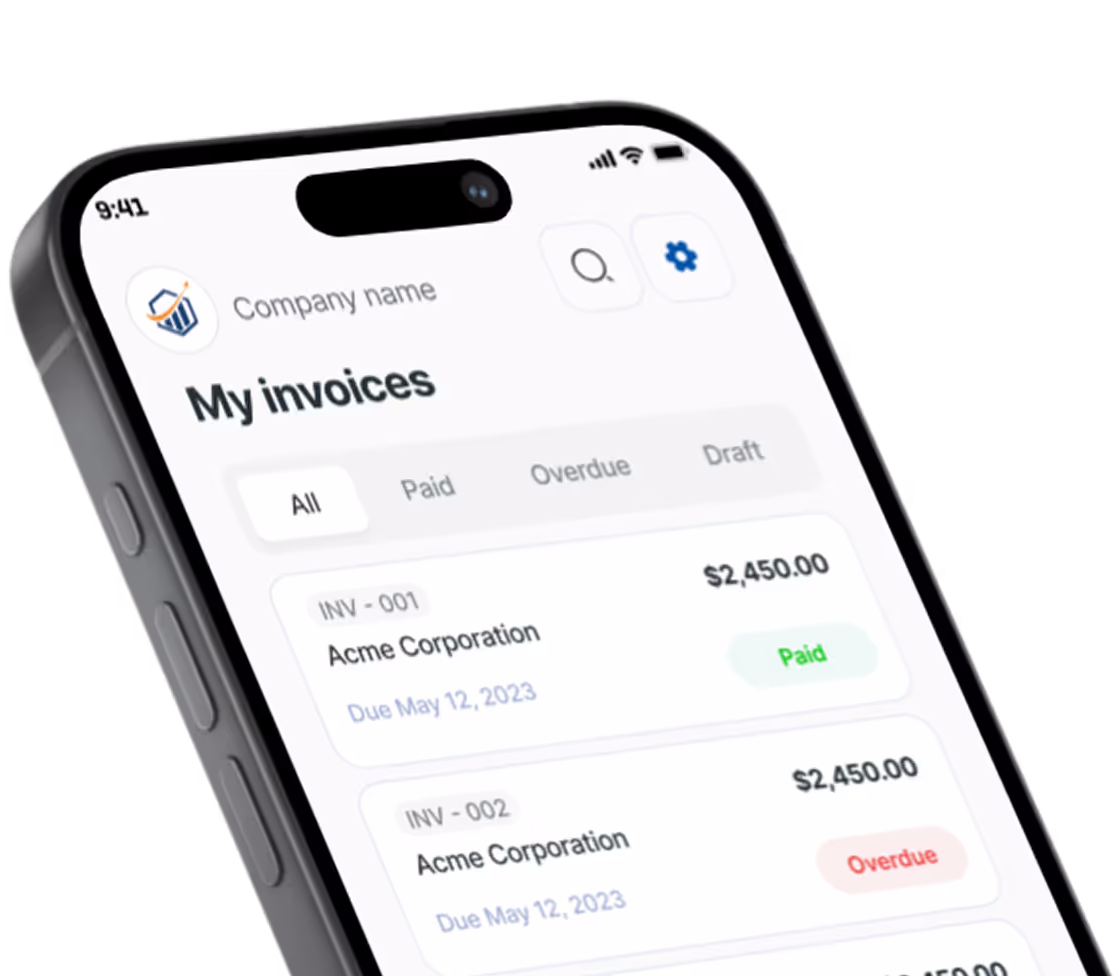
This is where the right tool earns its keep. With Pronto Invoice, you can send the invoice from your phone the moment the job is done, mark who has paid and who has not at a glance, and — the part that connects straight back to margins — see revenue per client and per job from your invoice history. That history is how you spot which jobs are actually profitable and which ones quietly drain you. The client who always pays fast and never haggles, versus the one who runs you long and pays slow — the numbers will tell you which is worth your best hours.
FAQ
Is a 10 percent profit margin good?
For a labor-heavy local service business, 10 percent net is solid and healthy — it lands right at the bottom of the “solid” range and ahead of the all-industry average of about 8.5 percent. It is a perfectly good place to be, and a reasonable target if you are currently below it. For a consultant or freelancer with almost no material costs, 10 percent would be low; they aim for 15 to 35 percent. Context is everything.
How do I know if I’m undercharging?
Run the net-margin math from the section above on a handful of real jobs. If your net keeps landing below 5 percent across normal jobs — not just one bad one — you are likely undercharging, leaving markup on materials, or eating costs you should be billing. The benchmark table is your reality check: if your trade keeps 8 to 15 percent net and you are at 4, the gap is the signal.
Can I improve margins without raising prices?
Yes, and it is usually the faster fix. Mark up materials to a fair standard, bill for drive time where you can, write a change order the moment scope grows, watch your payment processing fees, and — most of all — make sure every finished job actually gets invoiced. None of that touches your hourly rate. Getting paid faster helps too: it does not change the margin on paper, but it keeps cash in your account instead of in your clients’.
What’s the fastest thing I can fix today?
Send any invoices you have been sitting on. A completed job that was never billed is the single worst hit to your margin there is. After that, build the habit of invoicing same-day, every day.
Knowing your margin is not accounting homework — it is knowing whether the work is worth it. Run the simple math on a few jobs, find your number, and fix the quiet leaks before you touch your prices.
Want to see which jobs and clients are actually carrying your business? Pronto Invoice lets you invoice from your phone the second the job is done and pull revenue per client and per job from your history — so you can stop guessing and start keeping more of what you bill. (It is invoicing software, not a replacement for your accountant — but it is where you will spot the patterns first.)
There is always something more to read

10 Steps to Set Up a Small Business: The Complete Startup Checklist for 2025
Learn 10 steps to set up a small business with this checklist covering LLC, banking, invoicing, insurance, and pricing.

1099 Requirements for Small Business (2026): Complete Guide
$600 threshold is now $2,000 for 2026. Learn 1099 requirements: 1099-NEC, W-9 rules, deadlines, filing.

How to Accept Payments Online
No website needed. Here is how to start accepting online payments as a small business — processors, payment links, and invoicing in one afternoon.