How to Start a Cleaning Business
Step-by-step guide to starting a cleaning business: startup costs, licenses, insurance, pricing, getting your first 10 clients, and invoicing from day one.


It’s late, you’re on your phone, and you’ve typed the same question into Google for the third night this week: how to start a cleaning business. You’re not afraid of the work. You’re afraid of the part nobody explains — the licenses, the insurance, the pricing, the moment a client asks for an invoice and you don’t have one ready.
Here’s the good news. You don’t need experience to start, and you don’t need a pile of cash. One solo cleaner profiled by Maidily reportedly hit roughly $80,000 in revenue inside five months with no prior background in the trade — not because of a secret, but because she got the boring stuff right early.
By the end of this guide you’ll know what type of cleaning business to start, exactly what it costs (down to the dollar), what licenses and insurance you actually need, how to price your first jobs so you make money instead of just staying busy, how to land your first 10 customers, and how to invoice clients and get paid like a pro from job number one.
Table of Contents
- Step 1: Residential, Commercial, or Specialty?
- Step 2: What Does It Actually Cost to Start?
- Step 3: Register Your Business and Get Legal
- Step 4: Price Your Services to Make Money
- Step 5: Get Your First 10 Customers
- Step 6: Hire Your First Cleaner Without Payroll Chaos
- Step 7: Cash Flow Through the Slow Season
- FAQ: Starting With No Experience
The timing is in your favor. The global cleaning services market hit about USD 442.1 billion in 2025 and is projected to reach USD 770.8 billion by 2033, a 7.3% annual growth rate, according to SkyQuest. North America already accounts for 31.8% of that market. Closer to home, CleanerHQ reports the U.S. residential cleaning segment grew 7.1% year over year heading into 2026, with 58% of cleaning businesses seeing more customer demand and 73% expecting revenue to grow this year. People want their homes cleaned and they’re searching for someone to do it. That someone can be you.
Step 1: Residential, Commercial, or Specialty?
The first decision shapes everything else — your startup cost, your pricing, how fast you land a customer, and how much you keep. There’s no wrong answer, but there is a right answer for you depending on how much money you have and how soon you need income.
Residential Cleaning
This is where most people start, and for good reason. You clean homes — recurring weekly or biweekly visits, plus one-time deep cleans and move-out jobs. Startup cost is the lowest of any path, and you can land your first paying customer within days because the buyer is a single homeowner, not a committee.
The trade-off is margin. Residential cleaning typically runs a 10–15% net profit margin, per Housecall Pro. It’s competitive, and you’re often working solo at first. But it’s the fastest route from “I have an idea” to “I got paid,” which matters when you can’t afford to wait months for revenue.
Commercial Cleaning
Offices, retail spaces, medical buildings, gyms. The margins are better — 15–20% net — and contracts are larger and more predictable, often billed monthly. One commercial account can equal a dozen homes.
The catch is the sales cycle. Commercial buyers want references, insurance proof, and sometimes a bonded crew before they’ll sign. You may go weeks between landing accounts. Commercial pricing usually runs $0.07–$0.20 per square foot, or roughly $30–$75 per hour (the ISSA pegs the average near $39), per Housecall Pro and ISSA data. It’s a stronger long-term play, but a slower start.
Specialty Services
Post-construction cleanup, Airbnb and short-term rental turnovers, medical-grade sanitization, carpet or window specialization. These command the highest margins — 20–28% — because fewer cleaners do them and the work is harder to commoditize.
Airbnb turnover in particular is a quiet goldmine: hosts need fast, reliable, repeat cleanings on a tight schedule, and they’ll pay for someone dependable. Specialty often requires a little more equipment or know-how upfront, but you can grow into it after starting residential.
| Niche | Startup cost | Net margin | Typical client value | Seasonal pattern | Sales cycle | Solo-viable? |
|---|---|---|---|---|---|---|
| Residential | $1,000–$3,000 | 10–15% | Recurring, moderate | Peaks May–Aug | Days | Yes — easiest start |
| Commercial | $3,000–$8,000 | 15–20% | High, contract-based | Steady year-round | Weeks | Harder solo |
| Specialty | $2,000–$6,000 | 20–28% | High per job | Varies by type | Days to weeks | Yes |
Bottom line: if you’re starting with limited cash and need income soon, start residential. You can layer commercial or specialty work on top once you have referrals and a few reviews.
Step 2: What Does It Actually Cost to Start?
Let’s kill the biggest myth first: you do not need tens of thousands of dollars. A solo residential cleaning business is one of the cheapest real businesses you can start.
The Minimal Path: Starting for Under $3,000
According to StartCosts and Housecall Pro, a lean solo residential setup runs $1,000–$3,000 all in. Here’s where the money goes:
- Supplies and equipment ($200–$600): A solid vacuum (a Shark or Bissell upright runs $120–$250), microfiber cloths, mop and bucket, a caddy, and cleaning solutions. Buy concentrate and dilute it — you’ll save hundreds over the first year. You probably already own half of this.
- Business registration + EIN ($50–$200): LLC filing fees vary by state, from about $40 in Kentucky to a few hundred elsewhere. Your EIN from the IRS is free.
- General liability insurance + bonding ($20–$60/month): A solo operator can often get a general liability and bonding bundle for $20–$60 a month, per ZenMaid. More on this below.
- First-month marketing ($0–$200): A free Google Business Profile, free social posts, and maybe $50–$200 on flyers or a small local ad. You can genuinely start with $0 here.
If money is tight, you can launch on the low end of this range — supplies you partly own, a free EIN, a basic GL policy, and free marketing — and reinvest your first paychecks into better gear.
The Professional Setup: $5,000–$10,000
If you have more runway and want to look established from day one, $5,000–$10,000 buys you commercial-grade equipment, branded uniforms and cleaning materials, a vehicle wrap or magnetic door signs, a professional logo, and a bigger initial marketing push. This isn’t necessary to start, but it shortens the time it takes to look like a real company rather than a one-person side gig.
One line item that costs almost nothing on either path: your invoicing tool. You can start sending professional invoices on a free tier and only move up when your volume grows, so “looking professional when I bill a client” is a startup cost measured in minutes, not dollars.
Insurance You Actually Need (and 2026 Rate Ranges)
This is the part that intimidates people, so let’s make it concrete. You don’t need to understand insurance law. You need three things, and here’s what each does and roughly costs.
- General liability (GL): Covers you if you damage a client’s property or someone gets hurt. If you knock over a $2,000 vase or your wet floor causes a slip, GL pays instead of you. Expect $64–$169 per month depending on your state, per MoneyGeek — though solo operators often land at the lower $20–$60/month range when bundled with bonding. Annually that’s commonly $500–$1,500. This is non-negotiable; many clients won’t hire an uninsured cleaner.
- Workers’ compensation: Only needed once you hire employees. It covers your cleaners if they’re injured on the job. Running $92–$326 per month depending on payroll and state, it’s a “later” cost, not a “starting” cost.
- Bonding (a janitorial/surety bond): This protects the client if one of your people steals from them. Clients — especially commercial and higher-end residential — often require it before letting you into their home or office. It’s inexpensive and frequently bundled with your GL policy. Having “bonded and insured” on your marketing is also a trust signal that wins jobs.
For a deeper breakdown of coverage types and how to get a certificate of insurance, see our guide to business insurance for contractors.
Break-Even Math: How Many Jobs Until You’re Profitable?
Numbers beat anxiety. Let’s run a realistic solo residential example.
Say your average job nets $150 and your monthly costs are modest — $50 insurance, $50 supplies replenishment, $100 marketing, so roughly $200/month in fixed costs plus a little gas.
- To cover your costs: Two jobs a month clears your fixed overhead.
- To net $2,000/month: At about $150 a job and accounting for supplies and gas eating into each, you’d need roughly 15–18 jobs a month — three or four cleans a week.
- To net $4,000/month: Around 30 jobs, which is a full solo week of work and the natural point where you start thinking about hiring.
That’s the honest math. You’re not gambling $30,000 hoping it works. You’re risking a few hundred dollars and proving demand one job at a time. The reported ~18% first-year failure rate for small cleaning businesses (a directional, secondary-sourced figure) is real — but most of those failures come from underpricing and running out of cash, not from the work drying up. Both are avoidable, and the next steps show how.
Step 3: Register Your Business and Get Legal
You can do all of this in an afternoon. None of it requires a lawyer.
Sole Proprietor vs. LLC vs. S-Corp
- Sole proprietor: The default if you do nothing. Free, simple, but your personal assets (your car, your savings) aren’t protected if you’re sued. Fine for testing the water, risky once you’re in clients’ homes regularly.
- LLC: The sweet spot for most cleaning businesses. It separates your personal assets from the business, costs a modest one-time filing fee, and looks more credible to commercial clients. Most cleaners should form an LLC.
- S-Corp: A tax election, not a business type, that can save money on self-employment tax once you’re earning well (think $50,000+ in profit). Worth revisiting later, not at launch.
We break the trade-offs down in business structure types: LLC vs sole proprietor vs S-corp. For most readers, the answer is: start as an LLC.
Business License + DBA
Most cities and counties require a basic business license to operate legally — usually $50–$100 a year. If you’re operating under a name other than your own (like “Sparkle Clean Co.”), you’ll file a DBA (“doing business as”). Check your city’s website; the process is usually a single online form.
EIN: Get One in 5 Minutes
Your EIN (Employer Identification Number) is your business’s tax ID. You’ll need it to open a business bank account and to hire later. Go to IRS.gov, apply online, and you’ll have it in about five minutes. It’s free — never pay a third-party site for one.
Insurance Checklist Before Your First Client
Before you clean a single home for money, have these in place:
- General liability policy active (get the certificate emailed to you)
- Bonding in place (often bundled with GL)
- Business bank account opened (separate from personal — this matters at tax time)
- LLC or business registration filed
- Business license / DBA if your city requires it
That’s it. You’re legal, protected, and ready to bill.
Step 4: Price Your Services to Make Money
Underpricing is the number-one reason cleaning businesses fail. New owners panic, charge too little to win the job, then burn out doing exhausting work for less than they’d make at a regular job. Don’t do that. Here’s how to price with confidence.
Three Pricing Models
- Hourly: $35–$75 per cleaner, per hour, depending on your market. Simple, but it punishes you for being fast and efficient — the better you get, the less you earn per home.
- Flat-rate per home: The standard for residential, and usually the most profitable. A standard recurring clean runs $120–$280 per visit; a one-time clean runs $100–$250. A typical 2,000 sq ft home lands around $200–$400. Deep cleans command a 50–100% premium over a standard clean. (Figures from Housecall Pro and Jobber.)
- Per square foot: Standard for commercial — $0.07–$0.20 per square foot. Easy to quote once you’ve measured the space.
Not sure which to pick? Our breakdown of flat-rate vs hourly pricing walks through when each one wins. For most residential cleaners, flat-rate is the answer.
What to Charge in Your Market
Call three competitors in your area and ask for a quote on a home like the ones you’ll clean. Now you know the local range. Price in the middle, not the bottom — racing to be the cheapest attracts the worst clients and leaves you no room to pay a cleaner later. You’re selling trust and reliability, not the lowest number.
Recurring vs. One-Time Clients
Recurring clients are the whole game. A weekly or biweekly client is worth far more over a year than a one-time deep clean, and they stabilize your income. Price recurring visits slightly lower than one-times to reward the commitment, then build your schedule around these anchor clients. Setting up recurring invoices so the bill goes out automatically every cycle means you never chase a regular for payment again.
How to Invoice and Get Paid Professionally
Here’s where a lot of new cleaners quietly sabotage themselves. They finish a great job, then text the client “that’ll be $150, you can Venmo me.” It feels easy. It also makes you look like a hobbyist, invites “I’ll pay you next week,” and creates zero record for tax time.
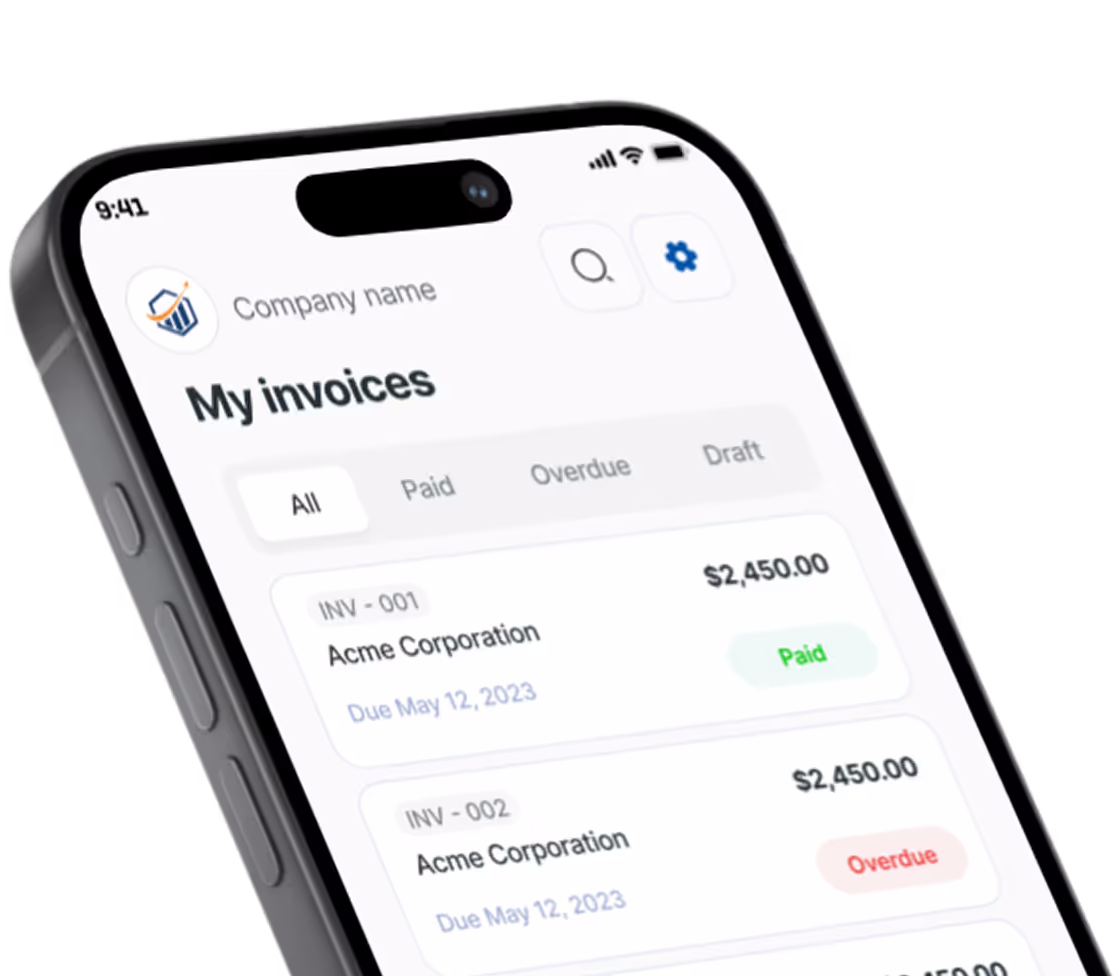
Send a real invoice instead. It takes about five minutes from your phone, and it changes how clients see you. A clean, branded invoice with your logo, the line items of what you cleaned, clear payment terms, and a button to pay online tells the client they hired a professional — the kind of small touch that turns a one-time job into a recurring one.
A good invoicing setup gives you:
- Your logo and a professional layout — so a one-person business looks like it has a staffed office
- Clear payment terms and optional late fees — “due on receipt” or “net 7,” set once
- Online payment links — clients tap and pay by card; you get your money faster
- Status at a glance — see who’s paid and who hasn’t, and mark a job as paid the moment cash lands
This is exactly the gap Pronto Invoice fills for cleaning businesses. You can build and send a professional invoice from your phone on a job site, attach your own Stripe or PayPal so clients pay online — with no cut taken out of your money — and start on a free tier while you’re getting going. No hidden caps sprung on you after you’ve done the work. For the cleaning-specific layout, see our cleaning invoice template guide. And if slow payers are a problem, these 15 strategies to get paid faster help.
Step 5: Get Your First 10 Customers
This is the part that scares people most: how do you compete with established companies that already have 200 five-star reviews? You don’t beat them at their game. You win your first 10 customers through proximity and trust, then let those 10 generate the next 40.
And the search trend is on your side — ZenMaid reports that more than 80% of consumers hire a cleaner after an online search. They’re looking. You just need to be findable.
Start With Your Network
Your first clients are people who already trust you. Tell everyone you know — friends, family, your old coworkers, the parents at your kid’s school, your neighborhood Facebook group — that you’ve started cleaning homes and you’re booking your first clients. Offer the first five a small “founding client” discount in exchange for a review. This alone can fill your first two weeks.
Google Business Profile — Set Up in 20 Minutes
This is the single highest-ROI free thing you can do. A Google Business Profile puts you on Google Maps and in local search the moment someone types “house cleaner near me.” Add your service area, hours, photos of your work, and your phone number. It’s free, takes about 20 minutes, and it’s where most of your inbound calls will come from once you have a few reviews.
Google Local Services Ads: Cost vs. ROI
Once you’re rolling, Google Local Services Ads put you at the very top of search with a “Google Guaranteed” badge, and you pay per lead rather than per click. They can be worth it because the leads are high-intent — someone actively searching to hire — but hold off until you have a few reviews, or your conversion rate (and cost per job) will hurt.
Instagram and TikTok: Why 25%+ of Solo Operators Get Leads From Social
Cleaning is weirdly perfect for social video. Before-and-after clips, satisfying deep-clean transformations, time-lapses of a messy kitchen becoming spotless — this content performs, and it’s free. Jobber data shows solo operators report 25% or more of their leads coming from Instagram and TikTok. Post consistently, tag your city, and let the work sell itself.
The Referral System That Keeps Paying
Happy clients are your cheapest marketing channel. Build referral into your process: after a great clean, tell the client you’ll take $25 off their next visit for any friend they send who books. A simple, stated offer beats hoping people remember to mention you. Referrals close faster and stay longer because they arrive pre-trusted.
Get Your First 5 Reviews
Reviews are the currency of getting hired online. After each of your first jobs, ask directly: “If you were happy with the clean, a quick Google review would really help me out.” Send the link. Five genuine reviews move you from invisible to credible, and they compound — each new client is easier to win than the last. For more, see our playbook on getting clients for a new business.
One trend worth leaning into: FieldCamp data shows 73% of consumers prefer green cleaning solutions and 68% will pay more for sustainable products. Advertising eco-friendly products is both a selling point and a reason to charge a little more.
Step 6: Hire Your First Cleaner Without Payroll Chaos
At some point you’ll have more work than you can do alone. That’s a good problem — and the moment your business stops being a job and starts being a company.
When to Hire (The Revenue Signal)
The signal isn’t a feeling, it’s a number. When you’re consistently booked solid — roughly 30+ jobs a month, turning away work, and netting $4,000+ — you’ve maxed out solo capacity. Hiring lets you take the overflow instead of losing it. Hire before you’re desperate, so you can train someone properly rather than throwing them at a client.
Contractor vs. Employee: Real Tax and Cost Differences
This choice has real money and legal consequences, so get it right.
- Independent contractor (1099): Lower cost and paperwork. The cleaner uses their own judgment, often their own supplies, and invoices you for their work. You don’t withhold taxes or pay workers’ comp. But misclassifying a worker who’s really an employee can mean back taxes and penalties — the rules are strict about control and independence.
- Employee (W-2): More overhead — you withhold payroll taxes, pay your share, and carry workers’ comp. But you get more control over schedules, training, and quality, which matters when your name is on the work.
Many cleaning businesses start with contractors and move to employees as they grow and want tighter quality control. Get the classification right from the start — our guide on contractor vs employee classification keeps you out of trouble. (One practical note: if you use 1099 cleaners, they invoice you for their jobs and you invoice your clients — keeping both sides on clean, dated invoices makes tax season painless.)
Training and Retention
Cleaner turnover is the silent profit killer. Every time someone quits, you lose the time you spent training them and risk the client relationship. Pay fairly, build a simple checklist so quality is consistent across whoever shows up, and treat your people well. A reliable cleaner you keep for two years is worth more than three you churn through.
Step 7: Cash Flow Through the Slow Season
Here’s something the other guides skip entirely, and it sinks new owners every winter.
The Seasonal Reality
Residential cleaning is seasonal. Demand peaks May through August — spring cleaning, summer hosting, move season — and troughs November through January, when people travel, spend on holidays, and cut discretionary services. If you budget like every month looks like June, you’ll be blindsided in December.
Build a 6-Month Cash Flow Buffer
The fix is simple discipline: during the peak months, set aside a portion of every payment into a separate buffer account. Aim to bank enough in summer to smooth out the slow months. Knowing exactly who’s paid and who’s still outstanding — at a glance, in real time — is what lets you see a slow stretch coming and adjust before it hurts. This is where tracking payment status in your invoicing tool earns its keep: it turns “I think money’s getting tight” into a number you can plan around.
You can also fight the trough directly: push recurring contracts (which pay through winter), market move-out and holiday-prep deep cleans in November and December, and lean into commercial accounts, which are steadier year-round than residential.
Annual Price Increases
Raise your prices once a year, every year. It feels scary, but it’s how you keep up with rising costs and reward your own improving skill. The data backs it: per Jobber’s Q3 2025 report, businesses that raised prices annually saw median revenue rise 7% year over year. A polite note to recurring clients — “as of next month, rates are adjusting slightly to reflect rising supply costs” — almost never loses you a good client, and it meaningfully grows your income over time.
FAQ: Starting With No Experience
Can I start a cleaning business with no experience?
Yes — and it can be an advantage. With no experience, you have no bad habits to unlearn. You’ll build good systems from the start: consistent checklists, fair pricing, real invoices, proper insurance. Most successful cleaning businesses were started by people who’d never run one before. The work itself is learnable in a few jobs; the business habits are what set you apart.
Can I start with $500 or less?
It’s tight but possible if you already own a vacuum and basic supplies. Your unavoidable costs are a general liability policy (often $20–$60/month for a solo operator) and any business license your city requires. Skip the professional setup, use free marketing (Google Business Profile, social, your network), and reinvest your first paychecks into better gear. Most people land in the $1,000–$3,000 range, but a true bootstrap start under $500 can work.
How long until I’m profitable?
Faster than most businesses, because your overhead is so low. Many solo cleaners cover their costs within the first month or two and reach a steady $2,000+ net per month within three to six months of consistent marketing. Profitability is mostly a function of how fast you land recurring clients.
What’s a realistic first-year income?
A solo cleaner typically earns $30,000–$60,000 a year, per Housecall Pro. Once you hire a small team of two to five cleaners, businesses commonly reach $100,000–$300,000 in revenue. Your first year is usually on the lower end as you build your client base — but recurring clients compound month over month.
Do I need certifications?
For standard residential cleaning, no. You don’t need a license to clean a house in most places — just your business registration, insurance, and any local business license. Certifications help for specialty work (carpet cleaning, biohazard, medical-grade sanitization) and can justify higher rates, but they’re optional, not a barrier to starting.
What software do cleaning businesses use?
Most cleaning businesses run on a simple stack: a scheduling tool to manage their calendar, and an invoicing tool to bill clients and get paid. You don’t need expensive all-in-one software to start. For the billing side, Pronto Invoice lets you create and send professional, branded invoices from your phone, accept online payments through your own Stripe or PayPal (with no cut taken from your money), and track who’s paid and who hasn’t — starting on a free tier. It’s the fastest way to look professional from job number one.
Starting a cleaning business is one of the lowest-risk, fastest-to-revenue businesses you can launch. You don’t need experience, you don’t need much money, and you don’t need to have it all figured out before you begin. Pick residential, get insured, price to make money, land your first 10 customers, and send a real invoice for every job. The market is growing, people are searching, and the only thing standing between you and your first paid clean is starting.
Ready to look professional from your very first job? Create your first invoice with Pronto Invoice in about five minutes — from your phone, on the go.
There is always something more to read

10 Steps to Set Up a Small Business: The Complete Startup Checklist for 2025
Learn 10 steps to set up a small business with this checklist covering LLC, banking, invoicing, insurance, and pricing.

1099 Requirements for Small Business (2026): Complete Guide
$600 threshold is now $2,000 for 2026. Learn 1099 requirements: 1099-NEC, W-9 rules, deadlines, filing.

How to Accept Payments Online
No website needed. Here is how to start accepting online payments as a small business — processors, payment links, and invoicing in one afternoon.