How to Start a Handyman Business
Step-by-step guide to starting a handyman business: licensing, pricing, insurance, getting your first clients, and getting paid fast from the job site.


You just finished swapping out a leaky kitchen faucet. You’re standing in the driveway, wiping your hands on a rag, and your phone’s already buzzing — the neighbor saw your truck and wants a ceiling fan hung next week. Good problem to have. Except you don’t have a license yet, you’re guessing at what to charge, and you have no real way to send a bill that doesn’t look like a text message.
Learning how to start a handyman business is less about the work — you already know how to fix things — and more about the parts nobody trained you for: licensing, insurance, pricing, finding clients, and getting paid before the job fades from memory. This guide walks the whole path, step by step, with real numbers so you can decide before you spend a dollar.
The demand is there. The US handyman services industry is worth about $365.4 billion in 2026, with 528,883 handyman businesses across the country (IBISWorld). Fewer than 2% are franchised — this is an overwhelmingly owner-operated, one-man-business trade. There’s room for one more truck on the road, and it can be yours.
Table of Contents
- Step 1: Is Starting a Handyman Business Right for You?
- Step 2: The Real Startup Costs
- Step 3: Licensing and Legal Requirements
- Step 4: Insurance You Actually Need
- Step 5: Pricing Your Jobs
- Step 6: Getting Your First 10 Clients
- Step 7: Getting Paid — The Invoicing Workflow
- Step 8: The Jack of All Trades Problem
- Step 9: What the First 90 Days Actually Look Like
- Common Mistakes to Avoid
- Conclusion
Step 1: Is Starting a Handyman Business Right for You?
Before you figure out how to start a handyman business, get clear on what a handyman actually is — legally and practically.
A handyman handles small repairs and maintenance: hanging doors, patching drywall, mounting TVs, fixing faucets, installing ceiling fans, sealing decks, swapping light fixtures. A general contractor runs larger structural and remodel projects, pulls permits, and manages subcontractors. Specialty trades — licensed electricians, plumbers, HVAC techs — do regulated work that requires their own state license and exceeds what a handyman can legally touch.
The line between handyman work and licensed contractor work is set by your state, and it matters. In California, the handyman exemption lets you perform jobs under $500 (labor and materials combined) without a contractor’s license. Cross that threshold and you need to be licensed. Other states draw the line at different amounts, or use different rules entirely — some don’t have a handyman category at all. You’ll confirm your state’s rules in Step 3, but know now that this threshold shapes how you bid and which jobs you take.
The income picture. Handyman rates run $65–$90/hr nationally. In high-cost metros like Seattle, NYC, or LA, experienced handymen charge $160+/hr. In the rural Midwest, rates settle around $75/hr. The demand isn’t an accident: Americans spend over $500 billion a year on home repairs and renovations, and the median US home is now 41 years old. Old houses break, and someone has to fix them.
A realistic first year for a solo operator who hustles: part-time at first while you build a client base, then ramping toward consistent weeks. Don’t expect a full schedule in month one — the cold-start lag is real, and you’ll plan for it in Step 9.
If you like fixing things, talking to homeowners, and working with your hands, this trade fits. It shares a lot with starting a cleaning business or a landscaping business — service trades where you get paid by the job and your reputation is your marketing.
Step 2: The Real Startup Costs
You don’t have startup capital to gamble, and you need real numbers before you commit. Here they are. Handyman business startup costs are lower than most trades, which is part of the appeal — but “low” isn’t “free.”
- Tools and equipment: $2,000–$5,000. If you’ve been doing side work, you probably own most of a starter set already. Budget for the gaps: a solid drill/driver kit, oscillating multi-tool, levels, a quality ladder, stud finder, and a reliable way to haul it all.
- Licensing and permits: $0–$2,000. Wildly state-dependent. Some states charge a small registration fee; others require a contractor’s license with testing and bonding that runs into the four figures.
- General liability insurance: $500–$1,200/year. Non-negotiable. More in Step 4.
- Business registration (LLC or sole proprietorship): $100–$500. Filing fees vary by state.
- Working capital buffer: $2,000–$3,000. This is the cushion that covers your gas, materials, and living costs while your first invoices clear. New handymen skip this and then panic in week three.
Total realistic range to launch: $5,000–$13,000. If you already own your tools and a usable vehicle, you’ll land near the bottom of that range.
Where the money comes from. Most handymen self-fund from savings — the cleanest way, and it keeps you debt-free. If you’re short on tools, equipment financing spreads the cost of big purchases. A small business loan or line of credit is an option once you have history, but you generally don’t need one to launch. Keep it lean and let the business pay for its own growth.
Step 3: Licensing and Legal Requirements
This is the step that scares people off, and it shouldn’t. You’re a handyman, not an accountant — but handyman license requirements are something you can knock out in a few hours of research and paperwork.
Do you need a license? It varies dramatically by state. Some states require no handyman-specific license at all for small repair work. Others require registration once you advertise or charge above a threshold. A handful require a full contractor’s license for almost anything beyond cosmetic work.
The handyman exemption threshold. Many states let you perform work under a set dollar amount without a contractor’s license. California’s threshold is $500 per job (labor plus materials). Your state’s number — or whether it has one at all — will differ. Check your state’s contractor licensing board directly before you take your first paid job. Search “[your state] handyman license requirements” and go straight to the official .gov page, not a blog summary.
Contractor’s license vs. handyman license. A contractor’s license is the bigger credential — it lets you bid larger jobs, pull permits, and work above the exemption threshold. It usually requires documented experience, an exam, and a surety bond. A handyman registration (where it exists) is lighter weight. Start with what your state requires for the jobs you plan to take, and upgrade to a contractor’s license later as you grow.
Timeline. Getting licensed can take 3 to 16 weeks depending on your state’s processing times, exam scheduling, and bonding requirements. Start this paperwork early — it’s the long pole in your launch.
Business structure: sole proprietorship vs. LLC. A sole proprietorship is the default, but there’s no legal wall between you and the business, so a lawsuit can reach your personal savings and home. An LLC puts up that wall, separating business liability from your personal assets. For a trade where you’re working in people’s homes around water, electricity, and ladders, the LLC’s liability protection is usually worth the modest filing cost. To weigh the trade-offs, see our guide on business structure types.
Step 4: Insurance You Actually Need
One liability claim can end a one-man business before it starts. A client trips over your extension cord, a pipe you touched leaks overnight and ruins a hardwood floor — without coverage, that’s your savings, your truck, maybe your house. Handyman insurance isn’t optional. Here’s what you actually need, in order:
- General liability insurance. The standard policy is $1M per occurrence / $2M aggregate, and it runs $500–$1,200/year for a solo handyman. It covers bodily injury and property damage you cause on the job. Many clients — especially property managers — won’t hire you without proof of it.
- Tools and equipment coverage. Your tools are your livelihood, and they get stolen out of trucks all the time. This coverage replaces them if they’re stolen or damaged.
- Commercial auto. Your personal auto policy usually won’t cover an accident that happens while you’re using the vehicle for work. If your truck is a work vehicle, you need commercial auto — and you don’t want to learn this the hard way after a fender-bender.
- Professional liability. Add this when you start advising clients on what work to do (not just doing it) or taking on bigger jobs where a planning mistake could be costly.
A Certificate of Insurance (COI) is what you’ll show clients to prove you’re covered. For the full breakdown of contractor coverage types and what a COI actually is, read our business insurance for contractors guide.
Step 5: Pricing Your Jobs
Figuring out how much to charge as a handyman is where most new operators leave money on the table. Price too low and you train clients to expect cheap; price with confidence and you build a real business.
Three pricing models, and when each works:
- Hourly — best for unpredictable jobs where you can’t see the full scope until you’re in it (troubleshooting, “fix whatever’s wrong with this”). Charge in clear increments and set a minimum.
- Flat-rate — best for known, repeatable jobs (mount a TV, hang a door, install a ceiling fan). The client knows the price upfront and you’re rewarded for being fast and good.
- Project-based — best for multi-task days or punch lists where you bundle several jobs into one quote.
Most established handymen mix all three. If you’re unsure which to lead with, our flat-rate vs. hourly breakdown digs into the trade-offs.
National benchmarks. Your rate should land in the $65–$90/hr range for most markets, higher in expensive metros. Just as important: set a minimum trip fee. The industry standard call-out fee is around $150 (2026). It covers your drive, your setup, and the reality that a “quick” 10-minute job still costs you an hour of your day. Without it, you lose money every time someone calls for something small.
Pricing common jobs (use these as a starting frame, then adjust to your market and the actual scope):
- Door repair or adjustment
- Faucet replacement
- Ceiling fan installation
- Drywall patch and paint
Quote each as flat-rate once you’ve done a few and know your real time. Track how long jobs actually take in your first month — that data is how you price accurately for the next year.
Materials markup. Marking up materials 20–50% is standard practice across the trade. It covers your time sourcing, picking up, and fronting the cost of parts. Be upfront about it — tell clients you mark up materials and they’ll respect it more than a surprise on the invoice.
Raising rates without losing your regulars. Give existing clients notice, raise in modest steps rather than one big jump, and tie it to the value you deliver. Your best clients won’t leave over a fair increase — they’ll leave if you stay so cheap they wonder what’s wrong. For a full playbook, see how to raise prices without losing clients.
Step 6: Getting Your First 10 Clients
You don’t need a marketing budget. You need to be findable and you need to be referred. Here’s how to get handyman clients from a cold start.
- Google Business Profile — the single most important move. When someone searches “handyman near me,” this is what shows up. It’s free, it puts you on the map (literally), and it’s where your reviews live. Set it up before anything else, with real photos of your work, your service area, and your phone number.
- Referrals from your first 2–3 jobs. Your earliest clients are your best salespeople. Ask directly — “If you know anyone who needs work done, I’d appreciate the introduction.” Offer a small referral incentive (a discount on their next job) to make it easy.
- Nextdoor and local community groups. Neighborhood platforms are where homeowners ask “anyone know a good handyman?” multiple times a week. Be the name that gets tagged.
- Yard signs at completed jobs. A simple sign in the yard while you work, with permission, turns every job into a billboard for the whole street.
- The cold-start reality. Your first 30 days are the slowest you’ll ever have. Bookings trickle before they flow. This is exactly why you built a working-capital buffer in Step 2 — so a slow first month doesn’t sink you.
What NOT to do: don’t race to the bottom on price to win the first jobs. It’s tempting to underbid to fill the calendar, but cheap clients refer other cheap clients, and you’ll spend a year trying to climb out of a hole you dug yourself. Win on responsiveness, reliability, and clean work — not on being the cheapest truck in town.
Step 7: Getting Paid — The Invoicing Workflow
Here’s the part that quietly makes or breaks a handyman business: actually getting your money. You can be the best in town and still go broke if your invoices pile up unsent and clients drift off without paying. This is the admin most people dread — and the easiest part to fix.
The single biggest change: bill before you leave the job site, not at the end of the week. The longer you wait, the colder the client gets and the more the job blurs in their memory. Same-day invoicing gets you paid faster, full stop.
Here’s the workflow that keeps cash flowing:
- Take deposits on bigger jobs. Ask for 25–50% upfront before you start. It covers materials and protects you if the client gets cold feet. A simple deposit invoice template makes this routine instead of awkward.
- Send a clear invoice the moment the work is done. Itemize it so the client sees the value — separate lines for labor and each material, the job address, and a due date.
- Hold a minimum charge policy. A $150 trip fee means a one-hour drive for a 10-minute job never leaves you underpaid.
- Accept cards and bank transfers, not just cash and check. “I’ll write you a check” turns into “I forgot the checkbook” turns into a week of chasing. Let people pay how they actually pay.
- Have a follow-up sequence for quiet clients. A polite reminder a few days after the due date — and another a week later — recovers most of what you’d otherwise lose. More tactics in how to get customers to pay invoices faster.
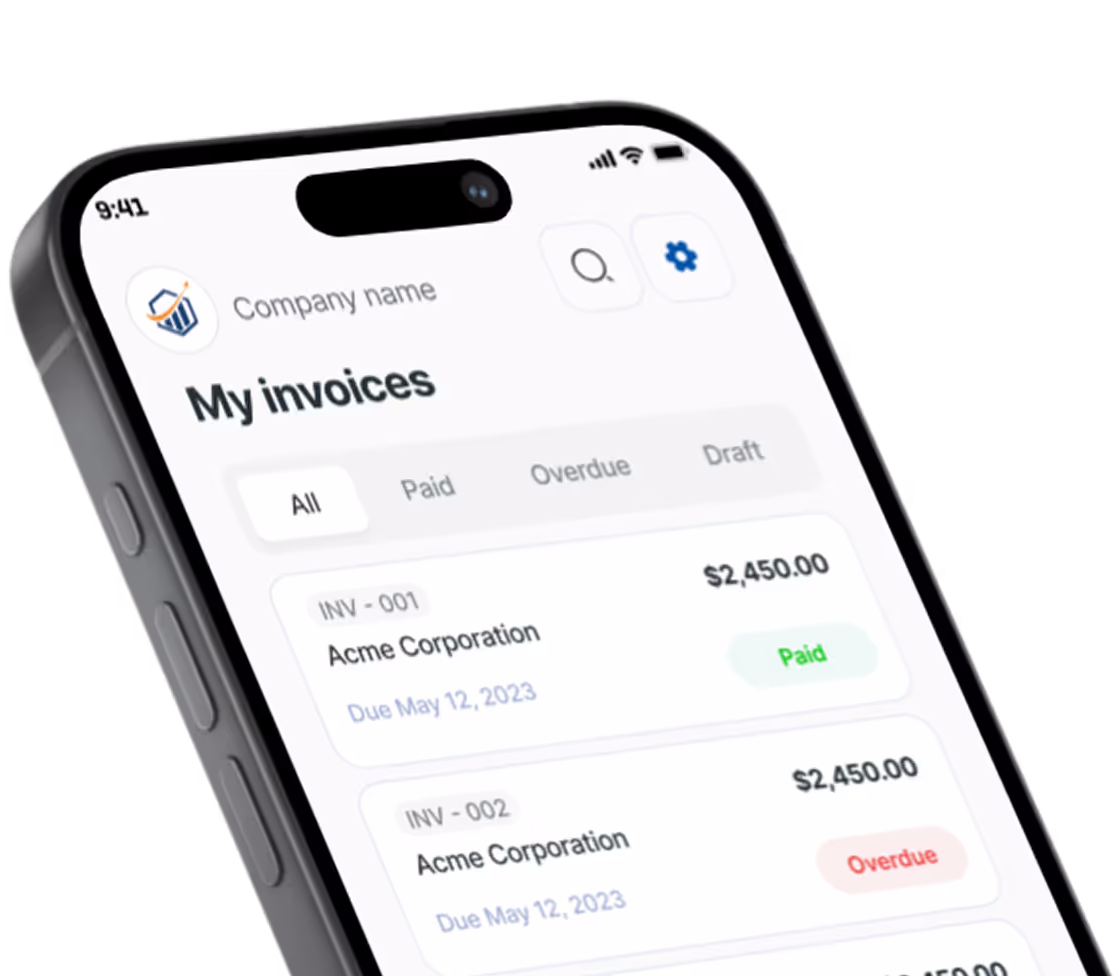
This is where an invoicing app earns its keep. A good one lets you build a multi-line invoice from your phone in under a minute — labor on one line, the faucet on another, the trip fee on a third — right there in the driveway. You can see which invoices are still open, send a reminder with one tap, and accept payment before you pull away from the curb. That turns invoicing from a Sunday-night chore into a thing you finish before you start the truck.
Pronto Invoice is built exactly for this — fast, multi-line invoices for people who get paid by the job, sent from your phone on the go. Honest pricing, no surprise fees, and a free tier to start. For the full deep-dive on billing varied small jobs, see our handyman services invoice guide.
Step 8: The Jack of All Trades Problem
There’s a quiet challenge in this trade: handymen get underestimated. “Anyone can hang a TV.” “It’s just a faucet.” That perception pushes you toward competing on price — exactly the trap to avoid.
The fix is positioning. Be the specialist at small jobs — not the cheap version of a contractor. Homeowners don’t want a general contractor’s minimum and three-week wait for a half-day punch list. They want someone reliable who shows up, does five small things well, and bills fairly. That’s a real, valuable specialty — own it.
Define what you will and won’t do. Saying no to scope creep protects your schedule and margins. If a job needs a licensed electrician or exceeds your state’s exemption threshold, refer it out — the homeowner will trust you more for being honest about it.
Consider a niche. Specializing makes you memorable and lets you charge more:
- Aging-in-place modifications (grab bars, ramps, accessibility upgrades)
- Rental property maintenance for landlords and property managers
- Commercial property small repairs and recurring maintenance
- Move-in/move-out repair lists for real estate agents
Communicate your minimum and your specialty on the first phone call. “My minimum is a $150 trip charge, and I specialize in small repair lists — I can usually knock out several things in one visit.” That one sentence filters out the wrong clients and tells the right ones they’ve found their person.
Step 9: What the First 90 Days Actually Look Like
You’re worried all this admin will eat your whole week. It won’t — front-load it, set up your routines, and it runs in the background while you do the work. Here’s a realistic 90-day map.
Week 1–2: Set the foundation.
- File your LLC paperwork
- Bind your general liability insurance and get your COI
- Set up your Google Business Profile with photos
- Book your first job (often a friend, neighbor, or referral)
Month 1: First paying work.
- Land your first 3–5 paying jobs
- Ask every satisfied client for a Google review — reviews are the engine of “near me” searches
- Expect a cash flow lag: you’re spending on gas and materials before invoices clear. This is normal and exactly what your working-capital buffer is for.
Month 2–3: The flywheel starts.
- Your first repeat clients come back
- The referral chain kicks in — one happy client sends two more
- Your invoicing routine becomes automatic: bill before you leave, every time
Month 6 checkpoint. Ask yourself: are you billing $4,000+/month consistently? If yes, you’ve got a real business — focus on raising rates and tightening your niche. If not, look at the usual culprits: are you underpricing, skipping the trip fee, billing late, or saying yes to too many low-value jobs? Each of those is fixable, and fixing one usually moves the needle.
Common Mistakes to Avoid
Most handyman businesses that stall make the same handful of mistakes. Skip these and you’re ahead of most of the 528,883 businesses out there.
- Underpricing to win the first jobs. It feels smart and it undermines the business long-term. Cheap is a hole, not a strategy.
- No minimum charge. A one-hour round trip for a 10-minute job destroys your margin. Set the trip fee and hold it.
- Skipping insurance. One liability claim can end everything. The $500–$1,200/year is the cheapest insurance you’ll ever buy against catastrophe.
- Billing late. The invoice you send Friday for Monday’s work is the invoice that gets paid slow — or forgotten. Send it before you leave or the same day.
- Trying to do everything. Scope creep kills handymen. Know your lane, refer out the rest, and protect your time.
Conclusion
Here’s the honest truth about how to start a handyman business: the first call is harder than the tenth. The work was never the hard part — you can already fix things. It’s the licensing, insurance, pricing, and getting paid that trip people up, and now you’ve got a plan for all four.
Get the admin side right early and it stops being a weight. Set up your LLC and insurance once. Set your minimum and your prices with confidence. Build the invoicing routine that gets you paid before you leave the driveway — then spend the rest of your time doing what you’re good at.
When you’re ready to send your first bill, Pronto Invoice helps you do it in under a minute from your phone — multi-line invoices, honest pricing, and a free tier to start. Get started at prontoinvoice.com and get paid for the work you just did.
There is always something more to read

10 Steps to Set Up a Small Business: The Complete Startup Checklist for 2025
Learn 10 steps to set up a small business with this checklist covering LLC, banking, invoicing, insurance, and pricing.

1099 Requirements for Small Business (2026): Complete Guide
$600 threshold is now $2,000 for 2026. Learn 1099 requirements: 1099-NEC, W-9 rules, deadlines, filing.

How to Accept Payments Online
No website needed. Here is how to start accepting online payments as a small business — processors, payment links, and invoicing in one afternoon.