How to Start a Trucking Business
Step-by-step owner-operator guide covering MC number, startup costs, finding loads, rate-per-mile economics, and getting paid from your cab.


You’ve got your CDL in your wallet. You can back a 53-foot trailer into a tight dock without breaking a sweat. You’re ready to stop hauling someone else’s loads and start hauling your own. So you do what everyone does — you search how to start a trucking business — and you find a hundred guides that walk you through the DOT paperwork and then go quiet on the part that actually keeps you in business: the money.
Here’s the truth most of those guides skip. The freight recession of 2023–2024 wiped out a lot of brand-new authorities. Overcapacity, weak spot rates, owner-operators who bought a truck on a high and got caught when rates dropped. The ones who survived weren’t the ones with the shiniest rigs. They were the ones who understood the economics from day one — what it actually costs to run a mile, what to charge, and how to get paid before the maintenance bill comes due.
This guide covers both halves: the licensing and authority you need to be legal, and the financial reality that decides whether you’re still trucking next year. Let’s get into it.
Table of Contents
- Step 1: The Real Startup Costs (Before You Buy a Truck)
- Step 2: Business Structure and Operating Authority
- Step 3: Getting Your CDL and Required Licenses
- Step 4: Equipment — Buy, Lease, or Lease-Purchase
- Step 5: Finding Your First Loads
- Step 6: Rate-Per-Mile Economics
- Step 7: Getting Paid — Invoicing and Cash Flow
- Step 8: Expense Tracking and Tax Deductions
- Step 9: Ongoing Compliance (Don’t Let This Slip)
- Frequently Asked Questions
Step 1: The Real Startup Costs (Before You Buy a Truck)
The first thing to know about how to start a trucking business is that the cheap numbers floating around online aren’t real. You’ll see a YouTube thumbnail promising you can get a trucking authority for $300, or a “start with $10K” video. The $300 figure is just one filing fee. The $10K figure ignores insurance, your truck down payment, and the working capital you need to survive the gap between hauling a load and getting paid for it.
Trucking is a real industry with real money in it — the U.S. trucking market hit $875.2 billion in 2025 and is projected to reach $1,245.6 billion by 2035 (Vantage Market Research). But getting your slice means showing up with enough cash to absorb the first few months.
Here’s where the money actually goes when you’re starting as an owner-operator:
| Cost category | Realistic range |
|---|---|
| Used truck down payment (financed) | $10,000–$25,000+ |
| Operating authority (MC) + filings | $320–$390 |
| First-year insurance (often partial down payment) | $10,000–$18,000 liability + cargo/physical damage |
| IRP apportioned plates | $1,500–$2,000/year |
| Permits (UCR, IFTA, HVUT) | ~$650+ |
| First fuel and tolls before you get paid | $2,000–$5,000 |
| Working capital buffer (the part everyone forgets) | $10,000+ |
Add it up and the honest owner-operator trucking startup costs for a financed used truck land at roughly $25,000–$60,000+ in cash to start. Go for a new truck and you’re looking at $50,000–$100,000+. The buffer matters most. Brokers pay on 30- to 60-day terms, so you can deliver $15,000 of freight in month one and not see a dime of it until month two — while fuel, insurance, and your truck payment all come due now.
If you don’t have that buffer, you’re one blown turbo away from being out of business. Plan for it.
Step 2: Business Structure and Operating Authority
Before you can legally haul freight for hire, you need a business and an authority. Here’s the order that works.
Pick a business structure. Most owner-operators run as either a sole proprietor or an LLC. A sole proprietor is simpler and free, but your personal assets — your house, your savings — aren’t protected if you get sued after an accident. An LLC costs a state filing fee (usually $50–$300) and gives you liability protection plus more flexible tax options. For most owner-operators putting an 80,000-pound vehicle on the road, the LLC is worth it.
Get your EIN. Apply for an Employer Identification Number directly on the IRS website. It’s free, and you get it the same day online. Don’t pay a third party for this.
Get your USDOT number. Your USDOT number is your safety identifier with the FMCSA. There’s no fee. It tracks your inspections, crashes, and compliance reviews.
Get your MC number (operating authority). Your MC number — your motor carrier operating authority — is what actually lets you haul regulated freight across state lines for money. You file Form OP-1 with the FMCSA. It costs $300 per authority type (most owner-operators just need common-carrier authority for property). Budget 20–25 days for the authority to activate.
File your BOC-3. This designates a process agent in each state — someone who can receive legal documents on your behalf. A filing service handles it for $20–$40, and it doesn’t need renewing.
Line up insurance before FMCSA activates you. This is the gate. The FMCSA won’t activate your trucking authority until your insurance company files proof of coverage on your behalf. No insurance filing, no active authority, no legal loads. Which brings us to the next reality check — insurance is one of your biggest line items.
Step 3: Getting Your CDL and Required Licenses
If you don’t already hold your Commercial Driver’s License, that’s step zero. For tractor-trailers you need a CDL Class A. Training runs $3,000–$7,000 depending on the school, plus $100–$300 in state testing and licensing fees. Many new drivers get a carrier to sponsor training in exchange for a commitment to drive for them first — a reasonable way to bank experience before going independent.
Endorsements expand what you can haul and what you can charge:
- Hazmat (H) — required for placarded loads; opens higher-paying lanes but requires a TSA background check.
- Tanker (N) — for liquid bulk; tanker and hazmat lanes are among the best-paying freight on the market.
- Doubles/Triples (T) — for pulling multiple trailers.
You don’t need all of them on day one. Add endorsements as you target specific freight.
Medical certificate. Every CDL holder needs a DOT physical from a certified medical examiner. The medical card is valid up to 24 months, then you renew. Keep it current — an expired card can pull you off the road.
The permits that come with running interstate:
- IRP (International Registration Plan) — apportioned plates so you can run in multiple states on one registration. Roughly $1,500–$2,000/year.
- IFTA (International Fuel Tax Agreement) — a license for reporting fuel tax across states. $0–$50 per state, with quarterly reports.
- UCR (Unified Carrier Registration) — an annual fee, around $40–$50/year for an operator running 0–2 vehicles.
- HVUT (Heavy Vehicle Use Tax) — a federal tax of $550/year for trucks over 55,000 pounds, filed on IRS Form 2290.
- ELD mandate — you’re required to run a registered electronic logging device. More on that in equipment.
None of these are optional. Skip one and you’re risking fines or an out-of-service order at a scale.
Step 4: Equipment — Buy, Lease, or Lease-Purchase
Your truck is your single biggest decision and your single biggest expense. There are four ways in.
Buy outright. If you’ve got the cash, owning a used truck free and clear is the lowest-cost-per-mile option. No monthly payment hanging over you. The catch is it ties up the capital you also need for that working-capital buffer.
Finance. The most common path. A new Class 8 tractor runs $150,000–$200,000+, with financed payments around $2,000–$3,000/month. A solid used tractor (5–7 years old, 500k–700k miles) runs $60,000–$110,000 — a much friendlier entry point for a first truck.
Lease. A straight lease runs $1,500–$2,500/month and keeps you out of a big down payment, but you own nothing at the end.
Lease-purchase. Carriers pitch lease-purchase programs hard, and they can work — but read the fine print. The payments are high, the truck often isn’t yours until the very end, and if you leave the carrier you can walk away with nothing. Go in clear-eyed.
What to check on a used truck: mileage and engine hours, full maintenance and service records, the condition of the after-treatment system (DPF/DEF — expensive to fix), tires, and a pre-purchase inspection by a mechanic you trust, not the seller’s. A clean record on a 600k-mile truck beats a sketchy 400k-mile one.
Trailer options. You can own your trailer, or run drop-and-hook where the shipper provides trailers, or join a trailer pool. Owning gives you flexibility; drop-and-hook saves you the capital and the maintenance.
ELD. The FMCSA requires a registered electronic logging device to track your hours of service automatically. Budget for the hardware plus a monthly subscription. It’s not optional, and the cleaner your logs, the fewer headaches at inspection.
Step 5: Finding Your First Loads
You’re legal, you’ve got a truck — now how to get your first load? You’ve got three paths, in rough order of margin.
Load boards. Services like DAT and Truckstop list available freight from brokers. This is where most new authorities start. The spot market is fast and accessible, but rates swing with supply and demand, and during the 2023–2024 freight recession those swings hurt. Load boards get you moving; they don’t get you rich.
Direct broker relationships. As you run lanes, you’ll find brokers you click with — ones who pay fairly and on time. Vet them before you haul. Check the broker’s MC age (a brand-new broker authority is a flag), their credit and payment history (Ansonia, Carrier411, or a quick search), and how long they’ve been in business. A great rate from a broker who never pays is worth nothing.
Direct shipper accounts. The highest-margin path is cutting out the broker and hauling directly for the company that owns the freight. It takes time and relationships to build, but a steady direct account at a good rate is the difference between grinding the spot market and running a stable business. Aim toward this.
Spot vs. dedicated. Spot-market freight pays per load and gives you freedom. Dedicated lanes — running the same route on a contract — pay steadier and let you plan, but lock you in. Many owner-operators run a mix: a dedicated lane for the floor, spot freight to fill the gaps.
One note for 2026: the freight market is recovering. Volumes are expected to grow 1–2% with rates gradually improving (ExpeditedJobs 2026 forecast). It’s a better year to start than 2023 was — but only if your numbers work, which is the next step.
Step 6: Rate-Per-Mile Economics
This is the step that separates the operators who survive from the ones who don’t. You have to know your numbers cold.
The American Transportation Research Institute (ATRI) put the average marginal cost of trucking at $2.26 per mile in 2024 — a record high. That breaks down roughly like this:
| Cost (ATRI 2024) | Per mile | Annual (~94,000 miles) |
|---|---|---|
| Driver pay / what you pay yourself | $0.798 | ~$75,012 |
| Truck & trailer payments | $0.390 | ~$36,660 |
| Fuel | $0.480 | — |
| Repair & maintenance | $0.198 | ~$18,612 |
| Insurance | $0.102 | ~$9,588 |
| Total operating cost | $2.26 | — |
Read that table again. At $2.26/mile all-in, a load that pays $2.00/mile is losing you money. To actually profit, you generally need to net above $2.50–$3.00/mile after the costs above. That’s your benchmark.
Rates vary by freight type. Recent spot-market ranges:
- Dry van: $1.60–$2.20/mile
- Reefer (refrigerated): a $0.20–$0.40/mile premium over comparable van lanes
- Flatbed: $1.80–$2.40/mile
- Tanker/hazmat: $2.50+/mile
This is why endorsements and the right trailer matter — flatbed and tanker freight clears your cost floor more easily than cheap dry-van runs.
Calculate your break-even rate per mile. Add up your fixed monthly costs (truck payment, insurance, permits) and your variable per-mile costs (fuel, maintenance, tires), divide by the miles you realistically run, and you’ve got the number you can’t go below. Run that math before you accept a load, not after.
This math is exactly why the average owner-operator net income is more modest than the YouTube highlight reels. ATBS, which does the books for thousands of owner-operators, reported clients averaged $64,524 in net income in 2024–2025. The top third pulled in around $156,000. The gap between those two groups isn’t luck — it’s discipline on which loads they accept and how tightly they control costs.
Factoring. When a broker pays on net-30 or net-60 and you need cash now, a factoring company will advance you most of the invoice for a 2–5% fee. It bridges the cash-flow gap, but that fee eats real margin on thin loads. Use it strategically, not by default. We cover the tradeoff in depth in Invoice Factoring Explained — when factoring is worth it and when you’re better off waiting for the payment.
Step 7: Getting Paid — Invoicing and Cash Flow
You can run perfect loads at great rates and still go under if you don’t get paid on time. Cash flow is what kills new trucking businesses, not bad driving.
Here’s the gap: brokers and shippers pay on net-30 to net-60 terms by default. You deliver today, you get your money in a month or two. Meanwhile fuel, your truck payment, and insurance don’t wait. Every day you delay sending the freight invoice is a day added to when the money actually lands in your account.
So bill the broker the same day you deliver. Not that night from a desk. Not at the end of the week when you finally do paperwork. The same day — ideally before you pull back onto the highway.
A proper freight invoice needs:
- Load/PRO number and the broker’s reference number
- BOL reference — the bill of lading number tying the invoice to the delivery (see Bill of Lading 101 for what the BOL is and why it matters)
- Origin and destination
- Rate per mile or flat linehaul rate
- Fuel surcharge
- Detention, layover, and any accessorial charges
- Your payment terms so there’s no confusion about when you expect to be paid
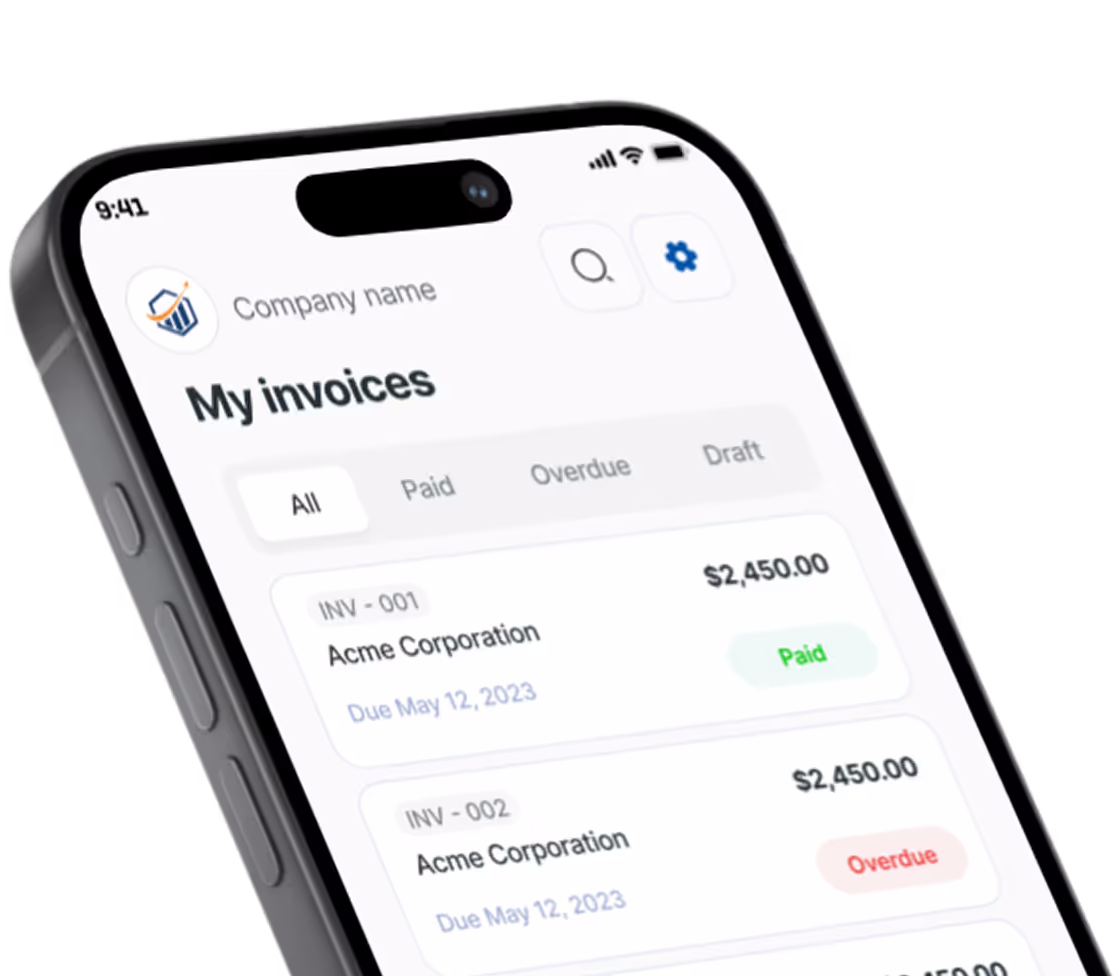
This is where invoicing from your phone changes the game. With Pronto Invoice, you send a clean, professional freight invoice right from the cab — before you’re back on the road — instead of letting paperwork pile up for a Sunday-night catch-up session. Pull up the load, reference the BOL number, add your line items and fuel surcharge, and send it. You can mark each invoice paid as the money comes in, so you always know who’s paid and who hasn’t. For the exact line items to include, the Trucking Invoice Template breaks down freight billing for owner-operators.
Two things that protect your cash flow before you ever haul a load: know your terms, and put them in writing. The Invoice Payment Terms guide walks through Net 30, Net 60, and due-on-receipt so you understand exactly what you’re agreeing to when a broker says “we pay net-45.” If a broker’s standard terms are too slow for your buffer, that’s a conversation to have up front — or a reason to factor that particular invoice.
Step 8: Expense Tracking and Tax Deductions
Every dollar you don’t track is a dollar you overpay in taxes. As an owner-operator, your deductions are substantial — but only if you have the records to back them up.
Major deductions:
- Fuel (your single biggest expense — keep every receipt)
- Truck and trailer payments / depreciation
- Insurance premiums
- Permits and licensing (IRP, IFTA, UCR, HVUT)
- Tolls and scale fees
- Repairs, maintenance, tires, parts
- ELD subscription
- DOT physical and CDL renewal costs
- Meals on the road (per-diem deduction for time away from home)
- Home office, if you dispatch and do paperwork from home
Keep your records straight:
- File Form 2290 for the HVUT every year (due by August 31).
- File IFTA quarterly — you report miles driven and fuel purchased per state, so your mileage and fuel logs have to be accurate.
- Keep every fuel receipt. IFTA and your tax return both depend on them.
- Open a separate business bank account from day one. Don’t run truck money through your personal account — it turns tax time into a nightmare and weakens your LLC’s liability protection.
The ATRI 2024 operating-cost benchmarks are a useful gut check. If your maintenance is running way above the $0.198/mile benchmark or your fuel is wildly off $0.48/mile, that’s a signal to dig in — a truck that’s costing more than the industry average is telling you something.
Step 9: Ongoing Compliance (Don’t Let This Slip)
Getting your authority is the start. Keeping it clean is the job. Compliance failures don’t just cost fines — they tank your CSA score, and a bad CSA score makes brokers and shippers nervous, which costs you better-paying freight.
Hours of Service (HOS). Drive within the legal limits, log accurately on your ELD, and don’t fudge it. HOS violations are among the fastest ways to wreck your safety profile.
Annual and recurring renewals — put these on a calendar:
- UCR — renew every year.
- HVUT (Form 2290) — file every August.
- MCS-150 — update your USDOT information every two years (biennial). Miss it and FMCSA can deactivate your number.
- BOC-3 — no renewal needed once filed.
- IRP and IFTA — renew/report on their schedules.
Drug & alcohol program. Every CDL driver operating under their own authority must be enrolled in a DOT drug and alcohol testing program (a consortium handles this for owner-operators). It’s required, and an inspection can ask for proof.
Watch your CSA score. Check it periodically through the FMCSA. Clean inspections, accurate logs, and a well-maintained truck keep it healthy — and a healthy score keeps the good loads coming.
Frequently Asked Questions
How much can an owner-operator make? Gross revenue typically runs $200,000–$350,000/year, but gross isn’t what you keep. After expenses, ATBS clients averaged $64,524 in net income in 2024–2025. High performers averaged around $87,614, and the top third earned about $156,000. The difference comes down to disciplined load selection and tight cost control — not the size of the rig.
What’s the difference between an owner-operator and a company driver? A company driver drives a carrier’s truck for a paycheck and benefits, with no business risk. An owner-operator owns (or leases) the truck, holds their own authority or leases on to a carrier, keeps the revenue, and carries all the costs and risk. More upside, more responsibility.
Can you start with one truck? Absolutely — and most carriers stay small. Per the ATA, 99.3% of U.S. trucking carriers operate 100 or fewer trucks, and a huge share are single-truck operations. One truck, run well, is a real business.
How long before you make money? Be realistic: 6 to 18 months to reach steady profitability is a fair expectation, and it depends entirely on disciplined pricing and a working-capital buffer to survive the early net-30/net-60 payment gaps. Operators who underprice loads to stay busy take far longer — or never get there.
What’s the biggest reason new trucking businesses fail? Cash flow. The combination of 30- to 60-day broker payment cycles and unexpected maintenance sinks more new authorities than any other cause. You can be profitable on paper and still run out of cash waiting to get paid. That’s why the working-capital buffer and same-day invoicing in this guide matter so much.
Do I need a broker or can I go direct to shippers? You can do both. Brokers give you immediate access to freight with no relationship-building required — great when you’re new. Direct shipper accounts pay more because there’s no broker margin, but they take time and trust to land. Start with brokers, build direct relationships as you go.
Start Smart, Get Paid Fast
Learning how to start a trucking business is really two jobs: getting legal, and staying profitable. The licensing and permits are the price of entry. The economics — your rate per mile, your buffer, and how fast you get paid — are what decide whether you’re still rolling a year from now.
Don’t let invoicing be the weak link. Pronto Invoice lets you send a professional freight invoice from the cab the moment you deliver, reference the BOL and load number, and mark each one paid as the money lands — so you always know what’s outstanding. It’s free to start, there’s nothing to set up, and no pricing games. Get the load delivered, get the invoice out, get paid.
Start invoicing from your truck at prontoinvoice.com.
Related reading: starting a different kind of one-person operation? See How to Start a Handyman Business. And before you’re on the hook for a load, make sure you understand your coverage — Business Insurance for Contractors: Coverage, Costs & COI Guide.
There is always something more to read

10 Steps to Set Up a Small Business: The Complete Startup Checklist for 2025
Learn 10 steps to set up a small business with this checklist covering LLC, banking, invoicing, insurance, and pricing.

1099 Requirements for Small Business (2026): Complete Guide
$600 threshold is now $2,000 for 2026. Learn 1099 requirements: 1099-NEC, W-9 rules, deadlines, filing.

How to Accept Payments Online
No website needed. Here is how to start accepting online payments as a small business — processors, payment links, and invoicing in one afternoon.