Pro Forma Invoice Template: What It Is and How to Use One
What a pro forma invoice is, when to issue one, what fields it needs, and common mistakes that delay shipments.


A buyer in Hamburg just emailed you. They want to import the custom dining table you build, but their procurement team needs “a pro forma invoice” before they can issue a purchase order. You have never sent one. You search for a pro forma invoice template and end up with a dozen tabs open, each saying something slightly different.
Here is the short version. A pro forma invoice is a preliminary, non-binding document that quotes a buyer the cost of goods or services before the sale is finalized. It looks like a regular invoice. It is not one. Use the wrong template and you can confuse your accountant, miscalculate customs duties, or accidentally book revenue that has not happened yet.
This guide covers what a pro forma invoice is, when to issue one, every field your template should contain, and the most common mistakes that delay shipments or muddy your books.
What Is a Pro Forma Invoice?
A pro forma invoice is a preliminary statement of intent sent from a seller to a buyer before the actual sale takes place. The Latin term pro forma literally means “as a matter of form” — and that is exactly what this document is. It shows the buyer what the deal will look like once it is real.
Think of it as a detailed quote structured to look like an invoice. It lists the goods or services, quantities, unit prices, total cost, and shipping or payment terms. But it is not a demand for payment. It is not a tax document. Your bookkeeper should never record it as revenue.
A pro forma invoice typically does three things:
- Gives the buyer a documented breakdown of pricing before they commit
- Helps the buyer’s procurement, finance, or compliance team approve the purchase
- Provides customs officials and freight forwarders the information they need to estimate duties, taxes, and shipping costs on international shipments
Once the buyer accepts and the goods ship (or the service is delivered), you replace the pro forma with a commercial invoice — the real, legally binding payment request.
Pro Forma vs Commercial Invoice: The Critical Distinction
If you only remember one thing from this guide, remember this: a pro forma invoice is a quote, a commercial invoice is a bill. They look almost identical, but their legal and accounting weight is completely different.
| Aspect | Pro Forma Invoice | Commercial Invoice |
|---|---|---|
| Purpose | Quote / statement of intent | Demand for payment |
| Legally binding? | No | Yes |
| Used for accounting? | No (do not book as revenue) | Yes (records the sale) |
| Used for tax filing? | No | Yes |
| Issued when? | Before goods ship or services start | After delivery is complete |
| Customs declaration? | Sometimes (estimating duties) | Always (the official record) |
| Numbering sequence? | Separate sequence (e.g., PF-2026-001) | Your standard invoice sequence |
| Includes “Pro Forma” label? | Yes — required | No |
The label matters. In a customs review, an audit, or a payment dispute, the document title is the first thing examined. A pro forma without the words “Pro Forma” printed on it can be treated as a commercial invoice, with all the legal weight that carries.
One more customs note worth knowing: US Customs and Border Protection (CBP) will accept a pro forma invoice as a substitute when a commercial invoice is not available at the time of entry — for example, on shipments of samples, goods sent for repair and return, or personal items not intended for resale. In those cases, the pro forma signals to customs that no duties should apply. The customs agent still makes the final call.
Pro Forma Invoice vs Quote vs Sales Order
Many people searching for a pro forma invoice template actually want a regular quote. This section helps you pick the right document.
A quote (or estimate) is the simplest of the three. It tells the buyer what the work will cost. It is informal, often a single paragraph or a short list. Domestic service businesses use quotes constantly — see our companion guide on quote vs estimate vs proposal if you need that depth.
A pro forma invoice is structured like an invoice and contains far more detail than a quote. It is the document of choice when:
- You are shipping internationally and customs needs a preview document
- The buyer’s procurement system requires an “invoice-shaped” document to issue a purchase order against
- A letter of credit is involved (banks need a pro forma to release funds)
- The buyer is a large company whose AP system needs to log the document before approval
A sales order is internal. It is the seller’s record that the buyer agreed to purchase. The buyer never sees the sales order in most workflows; they see the pro forma (before) and the commercial invoice (after).
In plain language: if you are a domestic plumber giving a homeowner a price for a water heater replacement, you want a quote. If you are a furniture maker shipping a custom piece to Berlin, you want a pro forma invoice.
When to Issue a Pro Forma Invoice
Pro forma invoices show up in a handful of specific scenarios. If you are not in one of these, you probably need a quote instead.
1. International trade and exports
This is the most common use case. When goods cross a border, customs officials in the destination country need a document that estimates the value, classification, and origin of the shipment so they can calculate import duties and taxes. A pro forma invoice serves that purpose before the actual commercial invoice is finalized.
2. Pre-shipment customs documentation
Some shipping companies and freight forwarders require a pro forma invoice before they will quote shipping or accept the booking. Air freight, ocean freight, and even some courier services use it to classify the shipment and estimate duties.
3. Buyer-side approval workflows
Large companies and government agencies often cannot issue a purchase order against a casual email quote. Their procurement systems need an “invoice-shaped” document with line items, totals, and reference numbers to log into their approval workflow. A pro forma fills that gap. The buyer receives your pro forma, runs it through internal approval, and then issues a PO referencing it.
4. Letters of credit
In international trade, a letter of credit is a guarantee from the buyer’s bank that the seller will be paid once shipping documents are produced. The bank needs a pro forma invoice up front so the credit can be sized and approved.
5. Domestic use as a formal quote
Less common but valid. If a corporate client’s procurement team requires more structure than a typical quote provides, a pro forma can serve as a formal cost estimate even for a domestic transaction. Freelancers and consultants working with enterprise clients sometimes use this approach.
Required Fields on a Pro Forma Invoice Template
A useful pro forma invoice template includes every field below. Missing fields cause customs delays for international shipments and approval delays for corporate buyers.
Document identification
- “Pro Forma Invoice” label — printed clearly at the top. This is non-negotiable.
- Pro forma number — use a separate sequence from your commercial invoices (e.g., PF-2026-001). Mixing the two corrupts your accounting records.
- Issue date
- Validity / expiration date — typically 30 to 90 days. Pricing on materials, currency, and shipping shifts; protect yourself with an expiration.
Buyer and seller information
- Your full business name, address, and contact info
- Buyer’s full business name and address
- Tax IDs for both parties (VAT number, EIN, or local equivalent)
- For EU shipments: EORI numbers (Economic Operators Registration and Identification) for both buyer and seller
Goods or services detail
- Description of each item — clear enough that a customs officer who has never seen the product can categorize it
- HS codes (Harmonized System codes) for international shipments — six-digit codes that classify goods for customs purposes
- Quantities and units of measure
- Unit price and line total
- Subtotal, applicable taxes, and grand total
- Currency — explicitly stated (USD, EUR, GBP, etc.). Never assume.
Shipping information (international)
- Incoterms — the three-letter codes (FOB, CIF, DDP, EXW, etc.) that define who pays for shipping, insurance, and customs at each leg of the journey
- Country of origin for each line item
- Estimated weight and dimensions of the shipment
- Method of shipment (air, ocean, courier)
- Port of loading and port of discharge (for ocean freight)
Payment information
- Payment terms (e.g., 50% deposit, balance on shipping)
- Accepted payment methods
- Bank details for international wire transfers (SWIFT/BIC, IBAN where applicable)
Disclaimer
- A note stating that the document is a pro forma invoice, not a demand for payment, and not a tax invoice. Something like: “This pro forma invoice is provided for quotation and customs purposes only. It is not a demand for payment and does not constitute a tax invoice.”
Pro Forma Invoice Example: International Shipment
Here is what a pro forma invoice looks like for a US-based artisan furniture maker shipping a custom dining table to a buyer in Germany.
PRO FORMA INVOICE
Pro Forma No.: PF-2026-014 Issue Date: April 30, 2026 Valid Until: July 29, 2026 (90 days)
Seller: Birchline Furniture Co. — 412 Mill Street, Asheville, NC 28801, USA — EIN: 84-2956712 — EORI: US842956712
Buyer: Hoffmann Wohndesign GmbH — Reeperbahn 22, 20359 Hamburg, Germany — VAT: DE298471203 — EORI: DE298471203
Description HS Code Country of Origin Qty Unit Price (USD) Total (USD) Custom solid walnut dining table, 96” × 42”, hand-finished 9403.60 USA 1 4,800.00 4,800.00 Crating and protective packaging 4415.20 USA 1 350.00 350.00 Subtotal: USD 5,150.00 International shipping (DHL Express, ATL → HAM): USD 720.00 Insurance: USD 95.00 Grand Total: USD 5,965.00
Currency: US Dollars (USD) Estimated weight: 142 lbs / 64 kg Estimated dimensions: 102” × 48” × 12” (crated) Incoterms 2020: CIF Hamburg (seller covers cost, insurance, and freight to Port of Hamburg) Method of shipment: Air freight
Payment terms: 50% deposit on order acceptance; 50% balance prior to shipping Bank details: First Citizens Bank — Account: 8204971623 — SWIFT: FCBKUS33
This pro forma invoice is provided for quotation and customs purposes only. It is not a demand for payment and does not constitute a tax invoice. Final commercial invoice will be issued upon shipment.
The structure is exactly what a German customs officer or a buyer’s procurement team needs to act on. Every field has a purpose.
Pro Forma Invoice Example: Domestic Corporate Quote
Now a domestic example. A graphic designer is bidding on a website redesign for a corporate client whose AP team requires a pro forma before issuing a PO.
PRO FORMA INVOICE
Pro Forma No.: PF-2026-007 Issue Date: April 30, 2026 Valid Until: May 30, 2026
From: Maren Cole Design — 88 Greenwood Ave, Brooklyn, NY 11218 — EIN: 27-4831256 To: Northbridge Asset Management — 1100 Lexington Ave, New York, NY 10128
Description Qty Unit Price Total Brand discovery workshop (1 day, on-site) 1 $2,400.00 $2,400.00 Website redesign — 12 page templates 1 $7,800.00 $7,800.00 Content migration and QA 1 $1,400.00 $1,400.00 Subtotal: $11,600.00 NY sales tax (where applicable): $0.00 (services) Grand Total: $11,600.00
Payment terms: 50% on PO issuance; 50% on project completion. Net 30 from final invoice date.
This pro forma invoice is provided for quotation and procurement purposes only. It is not a demand for payment. A commercial invoice will be issued at each milestone.
No HS codes, no Incoterms, no EORI numbers — those fields are international-only. But the pro forma label, the validity window, the disclaimer, and the separate numbering sequence all still apply.
Common Pro Forma Invoice Mistakes
Six mistakes account for nearly every problem people run into with pro forma invoices.
1. Treating it as a tax or accounting document
The pro forma is not revenue. Do not record it in your accounting system as income. Do not issue it to your bookkeeper. Wait for the commercial invoice. Mixing pro forma into your books inflates revenue you have not actually earned, which then has to be reversed during reconciliation or, worse, ends up on a tax return.
2. Forgetting the “Pro Forma” label
Without the label, the document can legally be interpreted as a commercial invoice. That changes its tax treatment, its enforceability, and its handling in customs. Print “PRO FORMA INVOICE” prominently at the top, every time.
3. Missing Incoterms or HS codes on international shipments
International customs cannot process a shipment without these. A missing HS code or unclear Incoterm is the single most common cause of a shipment being held at the destination port. You eat the demurrage fees while it sits.
4. No expiration date
Material costs, exchange rates, and shipping prices move. A pro forma without an expiration date gives the buyer the option to accept your quote at June pricing in November. Always include a validity window — 30 days for fast-moving goods, up to 90 days for stable contracts.
5. Using the same number sequence as commercial invoices
If your commercial invoice sequence runs INV-2026-0234, your pro forma sequence should run something like PF-2026-014. Sharing a sequence creates gaps, duplicates, and reconciliation chaos. Most accountants will catch this and bill you for the cleanup.
6. Treating it as binding
The pro forma is not a contract. The buyer has not yet agreed to the price, the scope, or the terms. Do not order materials, lock in subcontractors, or commit to a delivery date based on the pro forma alone. Wait for the PO, the signed acceptance, or the deposit.
From Pro Forma to Commercial Invoice: The Workflow
Once the buyer accepts the pro forma and goods ship (or services are delivered), the pro forma’s job is done. You issue the actual commercial invoice — the real demand for payment that goes into your accounting system, gets reported on taxes, and becomes the legal record of the sale.
The friction point is the manual re-keying. You spent thirty minutes building a clean pro forma with line items, HS codes, client info, currency, and Incoterms. Now you have to recreate the whole thing with a different label and a different number, and hope you do not transcribe the line items wrong.
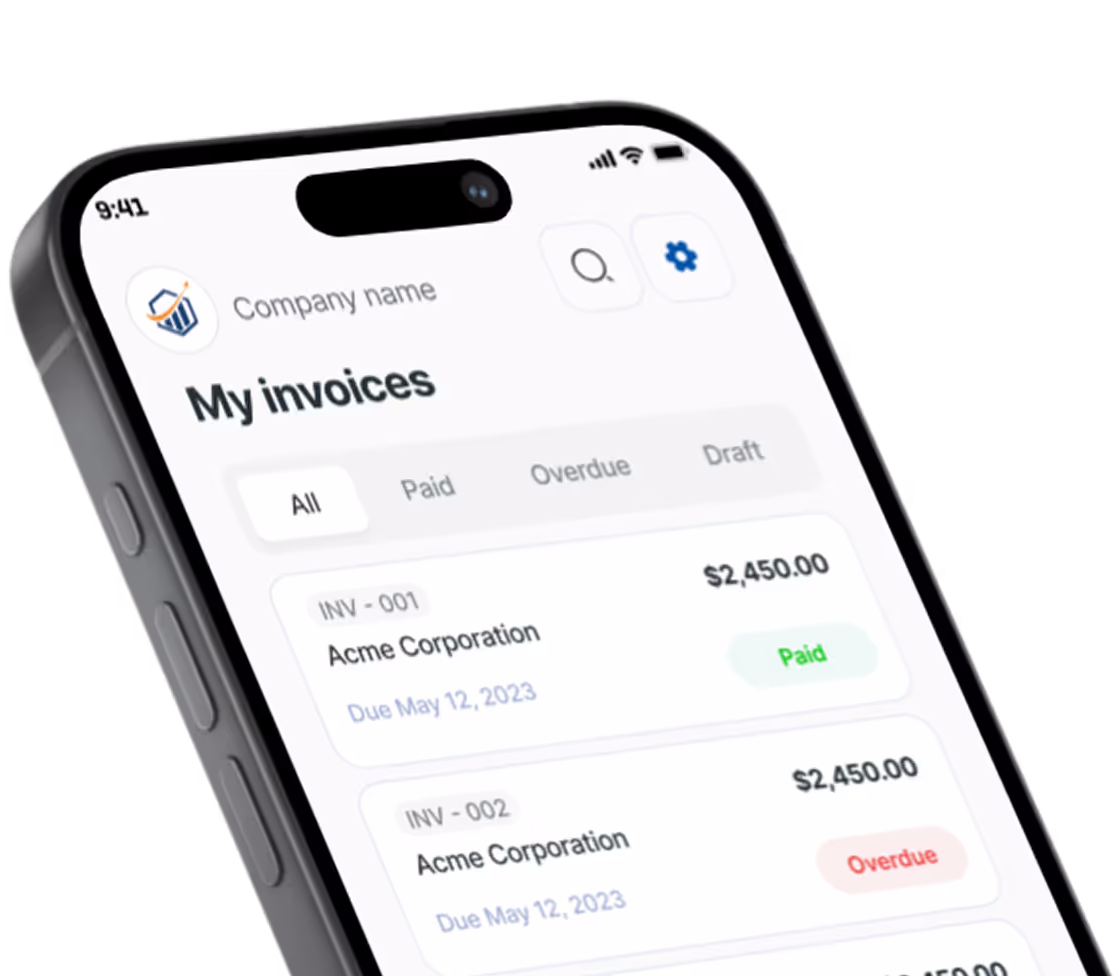
This is where a good mobile invoicing app earns its keep. With Pronto Invoice, you can generate a pro forma invoice from your phone — on the job site, at the workshop, or in a customer meeting — and then convert it to a commercial invoice with a single tap. Line items, client information, references, and pricing carry forward. You change the document type, update the issue date, and send. No retyping.
For exporters and field service operators who issue pre-work documents before a job is finalized, this is the workflow that turns “pro forma is a hassle” into “pro forma is just one tap.”
Pro Forma Invoice FAQ
Is a pro forma invoice legally binding?
No. A pro forma invoice is a quote, not a contract. The buyer has made no commitment to purchase, and the seller has made no commitment to deliver at the stated price beyond the validity window. Once both parties agree (typically through a purchase order, signed acceptance, or deposit), the binding sale begins, and a commercial invoice replaces the pro forma.
Can a buyer pay against a pro forma invoice?
In most workflows, no. Buyers wait for the commercial invoice before paying. The exception is when a deposit is part of the agreed terms — for example, “50% deposit on order acceptance” — which is paid against the pro forma’s listed deposit amount. The balance is paid later against the commercial invoice.
Do I report pro forma invoices on my taxes?
No. Pro forma invoices are not tax documents. They do not represent realized revenue and should not appear on a tax filing or in your accounting books as income. Only commercial invoices (and the payments against them) are reportable.
Pro forma invoice vs quote — are they the same?
They serve a similar purpose but are different documents. A quote is informal and unstructured. A pro forma invoice is structured to look like an invoice and contains far more detail — line items, references, currency, shipping terms, customs information. Use a quote for casual domestic transactions; use a pro forma when international trade or formal procurement is involved.
How long is a pro forma invoice valid?
Typically 30 to 90 days. The exact window depends on how stable your pricing is. Goods with volatile material costs (lumber, metal, fuel) often use 30-day validity. Stable contracts and services can use 60 to 90 days. Always include the expiration date on the document.
Can I use a pro forma invoice for customs?
Yes — that is one of the main reasons pro forma invoices exist. Customs authorities use the pro forma to estimate import duties and taxes before the shipment arrives. US Customs and Border Protection (CBP) also accepts a pro forma invoice as a substitute for a commercial invoice when the commercial invoice is not yet available — common with samples, goods for repair, or personal items not intended for resale. The final clearance always uses the commercial invoice once the goods ship. Both documents should match in their material details (line items, values, HS codes, country of origin).
Should pro forma and commercial invoices share a number?
No. Use separate numbering sequences. A common pattern is “PF-YYYY-NNN” for pro forma and “INV-YYYY-NNNN” for commercial. Sharing a sequence creates gaps in your invoice numbering and makes accounting reconciliation harder.
Key Takeaways
- A pro forma invoice is a preliminary, non-binding document that previews a sale before it is finalized. The Latin phrase pro forma means “as a matter of form.”
- The critical distinction: pro forma is a quote, commercial invoice is a bill. The label, the legal weight, and the accounting treatment all differ.
- Issue a pro forma when international trade, customs documentation, buyer-side procurement workflows, or letters of credit require it. For casual domestic work, a regular quote is enough.
- A useful pro forma invoice template includes the “Pro Forma” label, a separate number sequence, an expiration date, full buyer and seller info (with tax IDs and EORI numbers for EU shipments), HS codes and Incoterms for international, currency, and a clear disclaimer.
- The most expensive mistakes are forgetting the label, skipping HS codes or Incoterms on international shipments, and re-using your commercial invoice number sequence.
- The pro forma is not the end of the workflow — the commercial invoice replaces it once the goods ship or services complete. A good invoicing app converts one to the other without re-keying.
Once you understand what the document does and what it does not do, the pro forma stops being mysterious. It is just a quote that has put on a suit so customs and procurement can read it.
If you regularly issue pre-work documents — for international shipments, corporate procurement, or anywhere a formal quote is required — generating them on your phone instead of at a desktop saves real time. Pronto Invoice builds pro forma invoices in the field and converts them to final commercial invoices with one tap. Free to start, no credit card required.
There is always something more to read

10 Steps to Set Up a Small Business: The Complete Startup Checklist for 2025
Learn 10 steps to set up a small business with this checklist covering LLC, banking, invoicing, insurance, and pricing.

1099 Requirements for Small Business (2026): Complete Guide
$600 threshold is now $2,000 for 2026. Learn 1099 requirements: 1099-NEC, W-9 rules, deadlines, filing.

How to Accept Payments Online
No website needed. Here is how to start accepting online payments as a small business — processors, payment links, and invoicing in one afternoon.