How to Start a Pressure Washing Business
Step-by-step guide to starting a pressure washing business: startup costs, equipment, pricing, licensing, finding customers, and getting paid from the job site.


You finish a driveway, the homeowner’s grime washes into the gutter, and the concrete looks five years younger. They hand you cash, ask if you do houses too, and you realize the work is the easy part. Getting the business set up right — pricing, licensing, getting paid before you load the truck — is what separates the operators still running in year three from the ones who quit.
Learning how to start a pressure washing business comes down to seven decisions: what to spend, what to buy, how to stay legal, how to price, how to bill, how to find customers, and how to know if you’re actually making money. This guide walks each one with real numbers so you skip the mistakes that close most new shops.
The U.S. pressure washing market hit roughly $2.1–$2.3 billion in 2025 (Southeast Softwash / IBISWorld), with more than 32,000 businesses competing as of 2024 (FieldCamp / IBISWorld). There’s room — but only for operators who run it like a business.
Table of Contents
- Step 1 — What Does It Really Cost to Start?
- Step 2 — Equipment You’ll Actually Need
- Step 3 — Legal Setup: License, Insurance, and Compliance
- Step 4 — Pricing Your Jobs to Actually Make Money
- Step 5 — Estimates, Invoices, and Getting Paid
- Step 6 — Getting Your First Customers
- Step 7 — Tracking Expenses and Knowing If You’re Profitable
- Common Mistakes to Avoid
- FAQ
Step 1 — What Does It Really Cost to Start?
The honest answer: anywhere from $1,500 to $12,000, depending on whether you’re testing this as a side business or going full-time from day one.
If you already own a truck or van and want to start part-time on weekends, you can get rolling for $1,500–$5,000. Buy a professional setup and a used work vehicle, and you’re looking at the high end and beyond.
Here’s the breakdown:
| Item | Bare-bones (part-time) | Professional (full-time solo) |
|---|---|---|
| Pressure washer | $300–$700 (consumer-grade) | $2,000–$5,000 (commercial, 4+ GPM) |
| Soft-wash system | — | $1,500–$4,000 |
| Hoses, surface cleaner, nozzles, chemicals | $300–$800 | $1,000–$3,000 (pro-grade) |
| Tools, PPE, accessories | $200–$600 | $500–$1,500 |
| Equipment subtotal | $1,500–$5,000 | $5,000–$12,000 |
| Used work truck/van (if needed) | use existing | $10,000–$25,000 |
Licensing and insurance sit on top of those numbers — figure $650–$2,300 in your first year for registration, a local license, and general liability coverage (more on that in Step 3).
Start tracking every one of these expenses from your first purchase. Most new operators guess at their startup cost and never really know it. Log the pressure washer, the hose reel, the gas to pick it all up — when you match those costs against your first jobs, you find out your true number instead of estimating it months later.
The part-time route is the safer on-ramp. You keep your day job, buy a consumer-grade machine, and prove demand before you sink money into commercial gear.
Step 2 — Equipment You’ll Actually Need
Your pressure washer is the heart of the operation, and the specs that matter are PSI (pressure) and GPM (water flow). For most residential work, 3,000–4,000 PSI and 4+ GPM gets the job done. GPM is what actually rinses dirt away, so don’t fixate on PSI alone — a high-pressure machine with weak flow leaves you crawling through a driveway.
Hot vs. cold water: Cold water handles most surfaces — siding, concrete, fences, decks. Hot water earns its higher price only when you take on grease and oil: restaurant pads, drive-thru lanes, equipment yards. Start cold. Add a hot-water machine when commercial grease jobs justify the cost.
The supporting gear:
- Surface cleaner — the round attachment that makes flat concrete fast and streak-free. Non-negotiable for driveways.
- Hoses and hose reels — pro-grade hoses and reels save your back and your time loading up.
- Nozzles — a set of tips (0°, 15°, 25°, 40°, soap) for different surfaces and tasks.
- Soft-wash system — for roofs and delicate siding where high pressure causes damage. This is how you safely clean shingles and stucco.
- Chemicals/detergents — sodium hypochlorite for mold and algae, degreasers for grease. Biodegradable detergents are increasingly expected by customers and required in some areas, so factor them in.
Safety gear isn’t optional: goggles, gloves, non-slip boots, and ear protection. A 4,000 PSI stream cuts skin.
For transportation, a truck or trailer rig pays off fast. A trailer setup keeps your machine, water tank, hoses, and chemicals organized and ready, which means more jobs per day and less time loading. If you’re starting part-time, your existing vehicle and a few totes work fine until volume justifies the upgrade.
Step 3 — Legal Setup: License, Insurance, and Compliance
Skipping the legal setup is tempting when you’re eager to start, but it’s also how you lose your savings to one lawsuit or get shut out of every commercial contract.
Business structure. You can operate as a sole proprietor for free, but an LLC ($100–$500 in state filing fees) separates your personal assets from the business. If a pressure washer cracks a window or strips paint, an LLC keeps your house and savings out of the claim. For most operators, it’s worth the one-time cost.
Local business license. Most cities and counties require one, running $50–$300 per year. Requirements vary widely by location — call your city clerk or check the municipal website before you take your first paid job.
General liability insurance. Budget $500–$1,500 per year for a $1M/$2M policy. This is the single most important line item: most commercial clients and many homeowners won’t hire you without proof of coverage. It also protects you when water gets where it shouldn’t — into a basement, an electrical panel, a neighbor’s car.
Commercial auto insurance. If you’re using a vehicle for the business, expect $800–$2,500 per year. Personal auto policies typically exclude business use, so a claim could be denied without it.
Environmental compliance. This one surprises new operators. Many municipalities treat wash water entering storm drains as illegal pollutant discharge, with fines attached. As of 2026, 12 states have new wastewater management requirements that add $2,000–$5,000 per year in operating costs (FieldCamp). Know your local rules on water reclamation before you spray a commercial lot — some jobs legally require you to capture and dispose of runoff.
Don’t operate unlicensed and uninsured. A single property-damage claim can dwarf your entire startup budget, and one citation for illegal discharge can erase a month of profit.
Step 4 — Pricing Your Jobs to Actually Make Money
Pricing is where new pressure washing businesses live or die. Between 35% and 42% of new businesses close within their first year, and roughly half to two-thirds fail within two years — primarily from pricing mistakes (Southeast Softwash / FieldCamp). Underprice your work and you’ll be exhausted and broke at the same time.
Most pros price per square foot. Here’s a 2026 framework (FieldCamp):
| Service | Rate |
|---|---|
| Driveways & concrete | $0.10–$0.25/sq ft |
| Decks & patios | $0.20–$0.40/sq ft |
| House washing (siding) | $0.15–$0.40/sq ft |
| Roof soft-washing | $400–$1,500+ per job |
| Small commercial visit | $500–$2,000 |
| Annual commercial contracts | $5,000–$20,000+ |
Translated to real tickets: a driveway alone runs $150–$300, while a house plus driveway lands at $300–$600. Aim for a $400–$500 average ticket by bundling services rather than chasing one-off driveway jobs.
The deadly mistake is pricing only for your time and forgetting overhead — chemicals, fuel, insurance, equipment wear, and the unpaid hours driving and quoting. Labor costs rose 7.6% nationally in 2024 (FieldCamp), so prices that worked two years ago may now lose money. Build a margin in, and raise rates as your costs do.
A useful gut check: solo operators should earn an effective rate of $60–$120 per hour once you account for drive time and setup. If a job pencils out to $35/hour, the price is wrong or the job is.
Quoting an unfamiliar job without guessing: measure the square footage (pace it or use a phone laser measure), apply your per-square-foot rate, then add for difficulty — heavy mold, two-story height, oil stains, or limited water access. When in doubt, quote a range on-site and confirm after a quick walk-around rather than blurting a number you’ll regret.
Step 5 — Estimates, Invoices, and Getting Paid
Here’s the part nobody else writing about this business covers — and it’s the part that decides whether you actually collect the money you earned.
Send a professional estimate before you start. When you arrive, walk the property with the homeowner, measure, and hand them a written estimate on the spot. A clear estimate sets expectations, prevents the “I thought it’d be cheaper” argument, and makes you look like a real business instead of a guy with a hose. For the full breakdown on quoting, see writing an estimate for services.
Convert the estimate to an invoice the moment you finish. Don’t drive home and “send it later” — later is when invoices get forgotten and payments drag for weeks. Turn the estimate into an invoice right there in the driveway, before you load the truck.
Make it easy to pay you. Offer cash, card, and bank transfer. The faster and more flexible you make payment, the sooner the money lands. Texting or emailing a payment link beats waiting for a check that may never come.
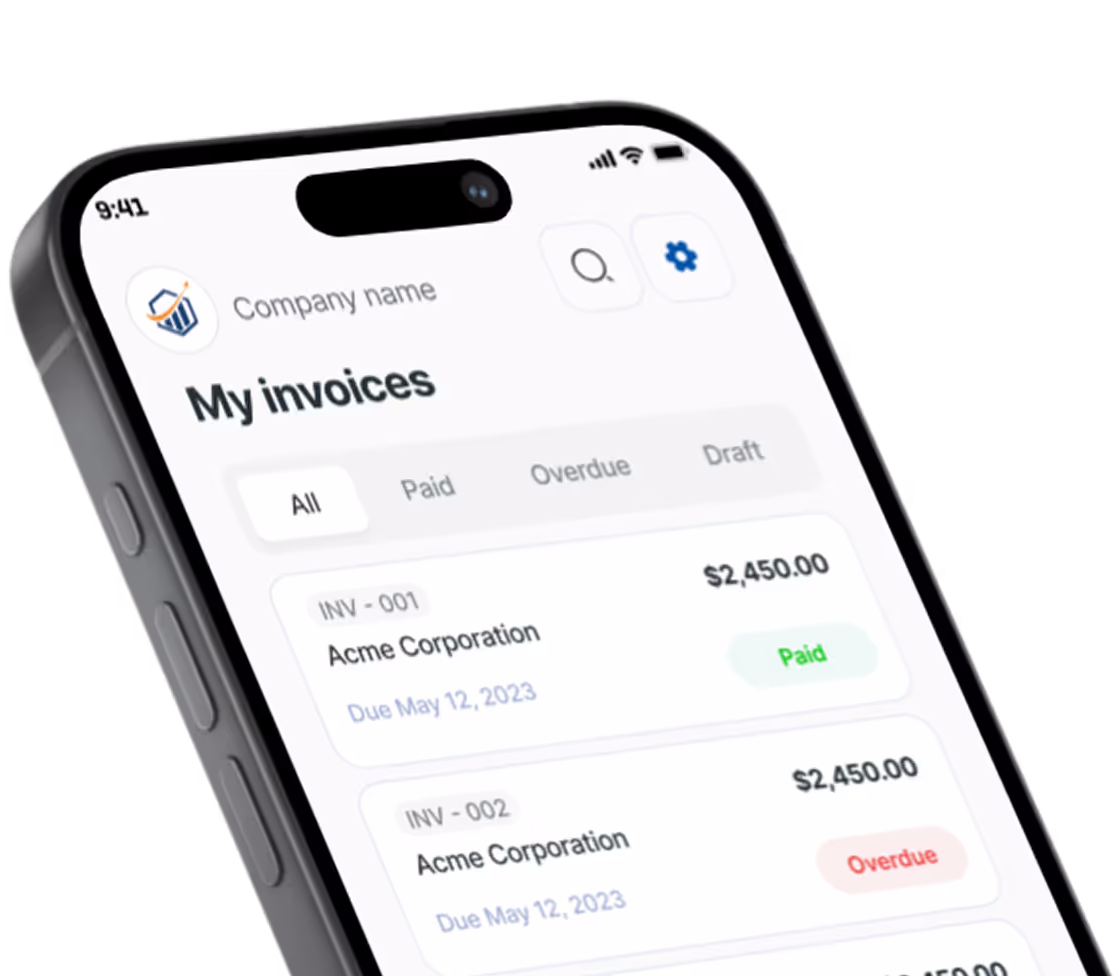
This is exactly where Pronto Invoice fits the job: send an estimate on arrival, tap once to convert it to an invoice when the work’s done, and send a payment link by text or email before you pull away — no waiting until you’re back home, no chasing the customer next week. For more on speeding up collection, read how to get customers to pay invoices faster.
Step 6 — Getting Your First Customers
You don’t need an ad budget to land your first ten jobs. You need to be visible to people who already trust you.
Word-of-mouth. Still the most effective channel and it costs nothing. Tell everyone you know you’re open for business, and ask them to mention you when a neighbor’s driveway looks rough.
Before/after photos. Document every single job. The transformation from black-stained concrete to clean is your best salesperson. Post the pairs on Facebook, Nextdoor, and Instagram — these images do the convincing for you.
Door-to-door in neighborhoods you just worked. After you finish a driveway, knock on the four or five nearest houses. They watched the result happen in real time. “I just cleaned the Johnsons’ driveway across the street — want me to take a look at yours?” converts better than any flyer.
Google Business Profile. Free, essential, and the first place locals look. Set it up, add your service area, and ask happy customers for reviews. Reviews are how you show up when someone searches “pressure washing near me.”
Ask for the referral right after the job. The minute the customer sees clean concrete is your best moment to ask, “Know anyone else who could use this?”
This matters more than ever: customer acquisition costs are rising 8–15% annually (Southeast Softwash). Paid ads keep getting more expensive, so for a new operator, referrals and word-of-mouth beat ad spend every time. Treat your first ten jobs as portfolio-builders — even at a slim margin, they generate the photos, reviews, and referrals that fill your calendar.
The same playbook works across the trades — if you’re weighing related services, see how to start a handyman business or a landscaping or lawn care business.
Step 7 — Tracking Expenses and Knowing If You’re Profitable
Most new operators never track expenses, and that’s a top reason they fail. They see cash coming in, feel busy, and assume they’re winning — until the truck needs a repair and there’s nothing in the bank.
Track these against every job:
- Chemicals used on the job
- Fuel to get there and run the machine
- Equipment maintenance and wear
- Insurance and licensing (spread across jobs)
The habit that makes it stick: log every expense the same day, tied to the job it belongs to. Wait a week and you’ll never reconstruct it accurately.
There’s hard data behind this discipline. Businesses using field-service management software show 23% higher profit margins (FieldCamp). The reason is simple — when you can see which jobs make money and which don’t, you stop taking the bad ones and start repeating the good ones.
Knowing your real profit comes from matching invoices to expenses on each job. When your invoicing and your expense tracking live in one place, you can tell at a glance whether that $400 house wash actually netted $300 or barely cleared $120 after chemicals, fuel, and drive time. That’s the difference between guessing and running a business.
Common Mistakes to Avoid
- Underpricing. The most common killer. Cheap rates attract bad customers and starve your margin. Price for overhead and a living wage, not just to win the job.
- Skipping insurance. Commercial clients require proof of coverage, and one accident without it can end the business. Carry general liability from day one.
- No cash-flow buffer for the slow season. In northern climates, winter can mean three months of little to no work. Save during the busy season so you’re not panicking in January.
- Buying the wrong equipment. A consumer machine can’t handle daily commercial use; a hot-water rig is wasted money if you only wash siding. Match the gear to the work you’re actually taking on.
- No system for estimates, invoices, and payments. Verbal quotes and “I’ll bill you later” lead to disputes and unpaid jobs. Use a repeatable process so every job gets quoted, invoiced, and collected.
FAQ
Do I need hot water or cold water? Cold water handles the vast majority of residential work — siding, concrete, decks, fences. Hot water only earns its higher cost for grease and oil jobs like restaurant pads or equipment yards. Start cold and add hot capability when grease work justifies it.
Can I do this part-time? Yes, and it’s a smart way to start. Part-time, low-volume solo operators typically earn $30K–$80K/year in revenue and $20K–$50K in owner income. Weekends with a consumer-grade machine let you prove demand before going full-time.
Do I need a license? Most cities and counties require a local business license ($50–$300/year), and requirements vary by location. No specialized training license is legally required to pressure wash, but you should check your municipality’s rules and any state wastewater regulations before your first paid job.
How long does it take to break even? With a bare-bones part-time setup ($1,500–$5,000), a handful of jobs can cover your gear. At a benchmark of 5 jobs/week at $300–$400 — $1,500–$2,000/week in revenue (Southeast Softwash) — many part-timers recover startup costs within the first season.
What if I only have $1,500 to start? That’s enough for a bare-bones part-time launch: a consumer-grade washer, basic hoses and a surface cleaner, nozzles, chemicals, and PPE, using a vehicle you already own. Reinvest your first profits into commercial gear as demand grows.
How seasonal is it? Very, in colder regions — northern winters can shut down work for three months. In warmer climates it runs year-round. Plan a cash buffer for slow stretches, and consider adding services like gutter cleaning or holiday-light installs to smooth out the off-season.
Ready to Start?
The work itself — turning grimy concrete clean — is the satisfying part. Don’t let the admin side slow you down. If you’re ready to take your first jobs, set up a simple way to quote, bill, and collect before you ever leave the driveway. Pronto Invoice lets you send estimates on arrival, convert them to invoices when the job’s done, and collect payment by text or email link from the job site — so you get paid before you load the truck. Spend your time washing, not chasing checks.
There is always something more to read

10 Steps to Set Up a Small Business: The Complete Startup Checklist for 2025
Learn 10 steps to set up a small business with this checklist covering LLC, banking, invoicing, insurance, and pricing.

1099 Requirements for Small Business (2026): Complete Guide
$600 threshold is now $2,000 for 2026. Learn 1099 requirements: 1099-NEC, W-9 rules, deadlines, filing.

How to Accept Payments Online
No website needed. Here is how to start accepting online payments as a small business — processors, payment links, and invoicing in one afternoon.