What Is an Open Invoice?
An open invoice is one you've sent but haven't been paid for yet. Learn what makes invoices stay open — and a simple routine to close them faster.


You wrap up the lawn job, load the mower back on the trailer, and tap “send” on the bill before you pull out of the driveway. The client gets a text with a link. Until they tap it and pay, that bill sits in one spot on your phone: open. So what is an open invoice, exactly? It’s a bill you’ve already sent that hasn’t been fully paid yet. Simple as that — but the ones that stay open too long are what quietly drain your week.
You’re not alone in having a pile of them. According to the Atradius Payment Practices Barometer (US 2025), 40–55% of B2B invoices are overdue at any given time. And 56% of US small businesses are currently owed money from late payments (Kaplan Collection Agency, 2025). This guide breaks down what an open invoice really means, why they pile up, and a phone-first routine to close them faster.
What Is an Open Invoice?
An open invoice is any invoice you’ve sent that hasn’t been paid in full. The moment you hit send, the bill is “open.” The moment the client pays, it’s closed. Everything between those two points — the waiting, the wondering, the follow-ups — happens while the invoice is open.
That’s the open invoice meaning in plain English — no accounting degree required.
Open vs. overdue — they’re not the same thing. This trips up a lot of people. An open invoice is one that’s unpaid, but still within the time you gave the client to pay. An overdue invoice is past its due date. So “open vs overdue” comes down to one question: has the due date passed? If you gave a client 14 days and it’s been 5, the invoice is open but not overdue. On day 15, it’s open and overdue. Most invoicing apps lump both under “open,” so you have to read the due date to know which is which.
Open vs. outstanding invoice. These mean the same thing. An outstanding invoice is just another way of saying an open one — money you’re still owed. Use whichever word you like.
How an Invoice Goes from Open to Closed
The path is short:
- You send the invoice → status: open
- The client pays → status: paid (closed)
- The due date passes with no payment → still open, now overdue
Here’s how it looks on a real job. You finish a fall cleanup, send the invoice from your phone before you leave the curb, and the client gets a text with a tap-to-pay link. That invoice is open the second it lands in their inbox. If they tap and pay by card that afternoon, it closes the same day. If they sit on it, it stays open — and once your payment terms run out, it slides into overdue.
The faster you move a bill from open to closed, the less of your money sits in someone else’s pocket.
Why Open Invoices Pile Up
If you’ve got a stack of open invoices, it usually comes down to a handful of reasons:
- Payment method friction. When a client pays by check, you’re waiting 5–7 business days for it to show up and clear. A card or ACH bank transfer can close the invoice the same day. The slower the method, the longer the invoice stays open. (See our ACH bank transfer guide for how same-day payment works.)
- A missing or disputed line item. If the client doesn’t recognize a charge — or you forgot to itemize the dump fee — they park the bill instead of paying it.
- No reminder ever went out. This is the big one. Timing decides everything. The sooner you make contact after a missed due date, the more likely you are to collect — a nudge within a day or two routinely outperforms one sent a week or two later. The longer a bill sits without a nudge, the harder it gets to collect.
- The client’s own cash flow is stuck. Sometimes they’re waiting to get paid before they pay you. You can’t control that, but you can be first in line when their money comes in.
The Real Cost of Too Many Open Invoices
Open invoices aren’t just numbers on a screen — they’re your money, parked. Here’s what the pile actually costs:
- You’re owed more than you think. Small businesses with outstanding invoices are owed more than $17,000 each on average (Kaplan Collection Agency, 2025). That’s a new truck payment sitting in other people’s accounts.
- You wait far longer than your terms say. Suppliers in North America wait 43 days on average to get paid, even when the terms are shorter (Kaplan Collection Agency, 2025). You wrote “due in 14 days,” and you’re still waiting a month and a half later.
- Chasing payment eats your week. Kaplan’s 2025 data found 65% of businesses spend 14 hours a week on collection admin. That’s almost two full workdays gone — not turning wrenches, not mowing lawns, just chasing checks.
- Some bills never close. According to the Atradius Payment Practices Barometer (US 2025), 5% of US B2B invoices get written off as bad debt — one in twenty never gets paid.
Late payments cost the average company $39,406 a year, and 10% lose over $100,000 (Kaplan Collection Agency, 2025). The pile is expensive. A routine is cheap.
A Simple Routine for Tracking Open Invoices
You don’t need accounting software to stay on top of this. You need a habit you can run from your phone in under a minute. Here’s how to track open invoices without losing your day to it:
- Send the invoice the moment the job is done. Before you leave the driveway. The single biggest reason invoices stay open is they go out late — days after the work, when the client’s already moved on. Bill on-site and the clock starts that much sooner.
- Know your aging buckets. Invoice aging just means grouping unpaid bills by how old they are. Keep it to three buckets: 0–30 days (within terms, leave it alone), 31–60 days (follow up now), and 60+ days (escalate). That’s your whole aging report in three lines — no spreadsheet needed.
- Send one reminder 3 days before the due date. A friendly heads-up before the bill is even late prevents most of your follow-up work.
- Follow up within 48 hours of a missed due date. This is where the money is. Remember the 65% success rate for contact inside 24–48 hours — versus 15% if you wait two weeks. A quick, polite nudge does the job. (Grab the wording from our follow-up email templates for unpaid invoices.)
- At 30+ days overdue, pick up the phone. Email is easy to ignore. A call usually isn’t. Our guide on how to handle late paying clients walks through what to say.
- At 60+ days, escalate. Send a final demand letter or consider a collections referral. By this point, the odds of friendly collection are low — but a firm, documented step still moves a chunk of these.
The point is to never let a bill drift. Reminders matter most: automated reminder cadences tend to get you paid noticeably faster than manual follow-up, shrinking your days sales outstanding — the average time it takes to get paid. Fewer days outstanding, more money in your account.
How Pronto Invoice Helps You Close Open Invoices Faster
Pronto Invoice is an invoicing app built for the way you actually work — from your phone, on the job, in between calls. It’s not accounting software, and it’s not trying to be. It does one thing: get your bills out fast and your money in faster.
Here’s how that maps to the open-invoice problem:
- Invoice from your phone on-site. The number one reason invoices stay open is they go out late. Send the bill before you leave the job, and you skip that delay entirely.
- Automatic reminders. You don’t have to remember to nudge anyone. Set the cadence once and Pronto sends the reminders for you — exactly the automated reminders that work at closing bills faster.
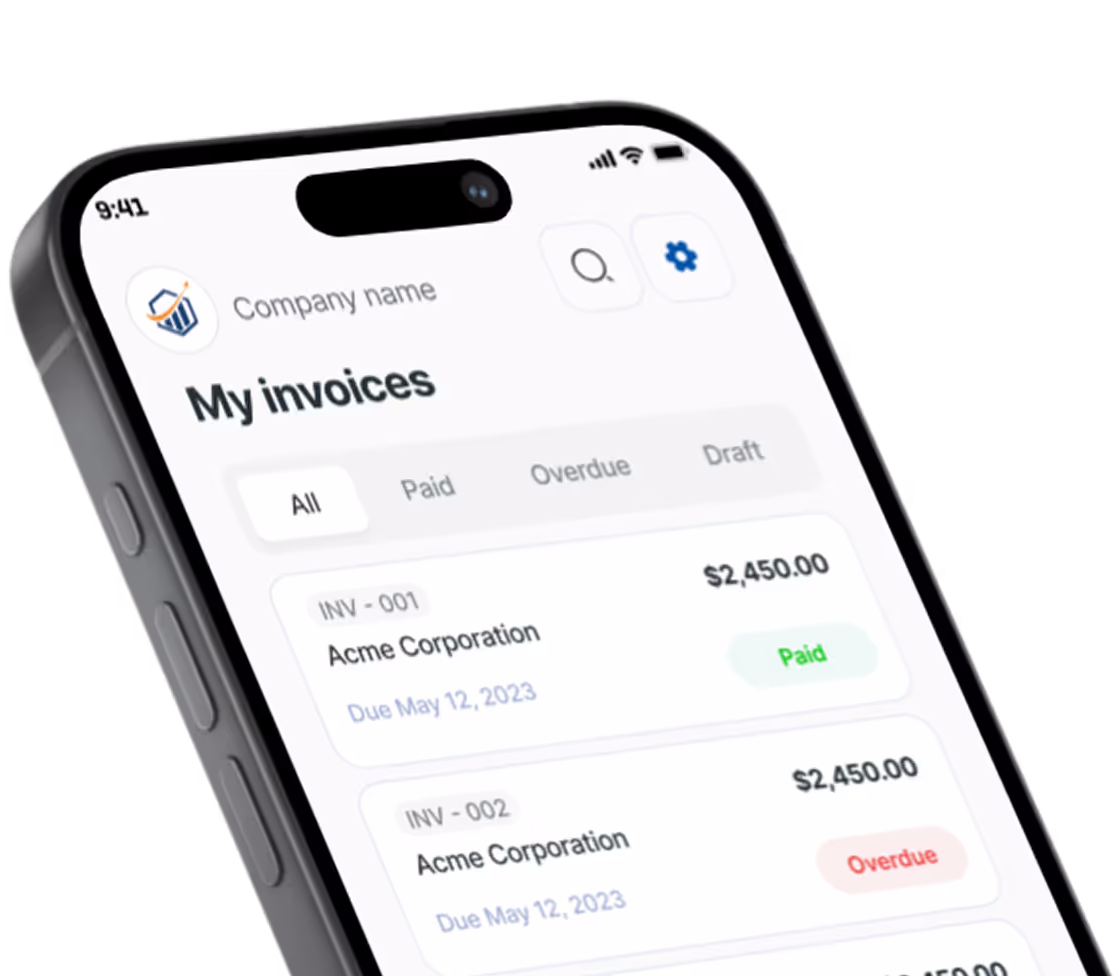
- A “who’s paid, who hasn’t” view. One glance tells you which invoices are open, which are overdue, and who to chase. No aging-report jargon, no accounting knowledge required.
- No payment processing markup. When the client pays, you keep more of it. Pronto doesn’t tack on a processing markup the way some apps do.
Want to stop letting bills drift? Start sending from your phone at prontoinvoice.com.
Frequently Asked Questions
What does “open” mean on an invoice? It means you’ve sent the invoice but haven’t been paid in full yet. The bill stays open from the moment you send it until the client pays — then it’s marked paid and closed.
Is an open invoice the same as an overdue invoice? No. An open invoice is any unpaid bill, including ones still within your payment terms. An overdue invoice is one that’s past its due date. Every overdue invoice is open, but not every open invoice is overdue.
When should I follow up on an open invoice? Send a reminder 3 days before the due date, then follow up within 48 hours of a missed due date. Reaching out within a day or two of a missed date gives you a far better shot at getting paid than waiting two weeks, by which point bills get much harder to collect.
There is always something more to read

10 Steps to Set Up a Small Business: The Complete Startup Checklist for 2025
Learn 10 steps to set up a small business with this checklist covering LLC, banking, invoicing, insurance, and pricing.

1099 Requirements for Small Business (2026): Complete Guide
$600 threshold is now $2,000 for 2026. Learn 1099 requirements: 1099-NEC, W-9 rules, deadlines, filing.

How to Accept Payments Online
No website needed. Here is how to start accepting online payments as a small business — processors, payment links, and invoicing in one afternoon.