
Fencing Invoice Template
Create professional fencing invoices in under 60 seconds. Download free templates or use Pronto Invoice's mobile app. Get paid faster on every job.
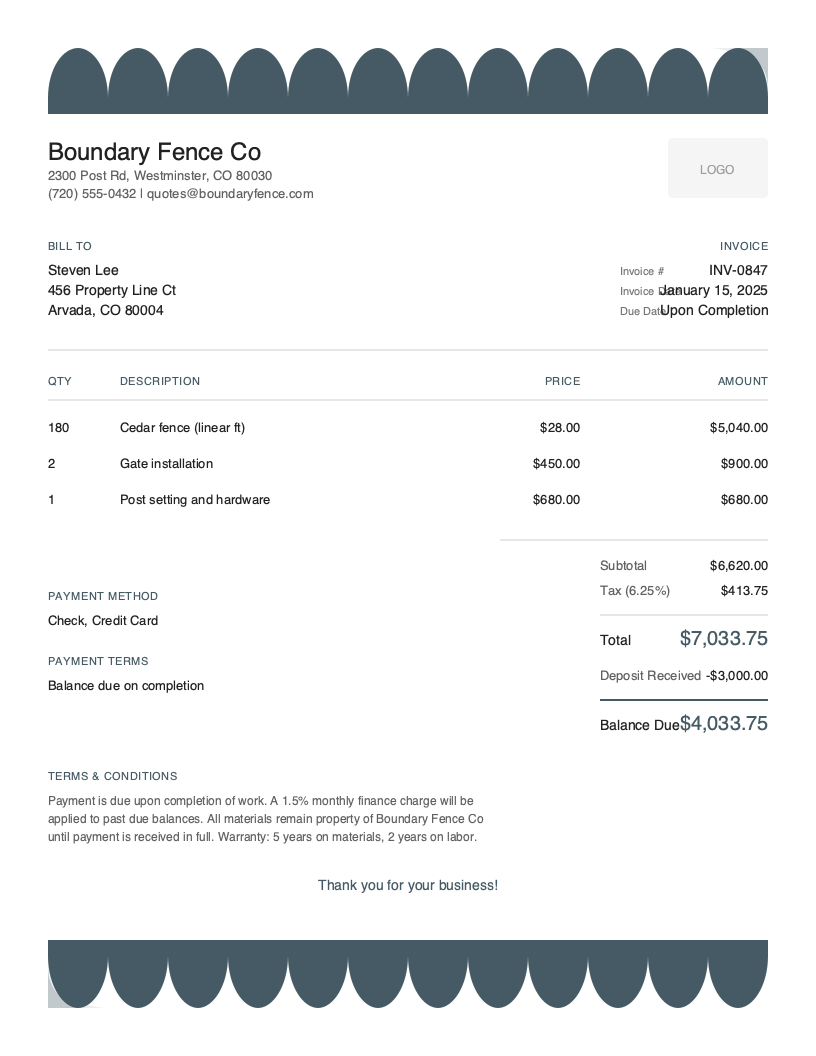
Download Free Fencing Invoice Template
Get Your Free Fencing Invoice Template
Download in your preferred format. Customize with your logo, colors, and business details. Start invoicing professionally in minutes.
Microsoft Word
Easy to customize, add your logo
Microsoft Excel
Auto-calculate totals and taxes
Fencing Invoice Template Variations
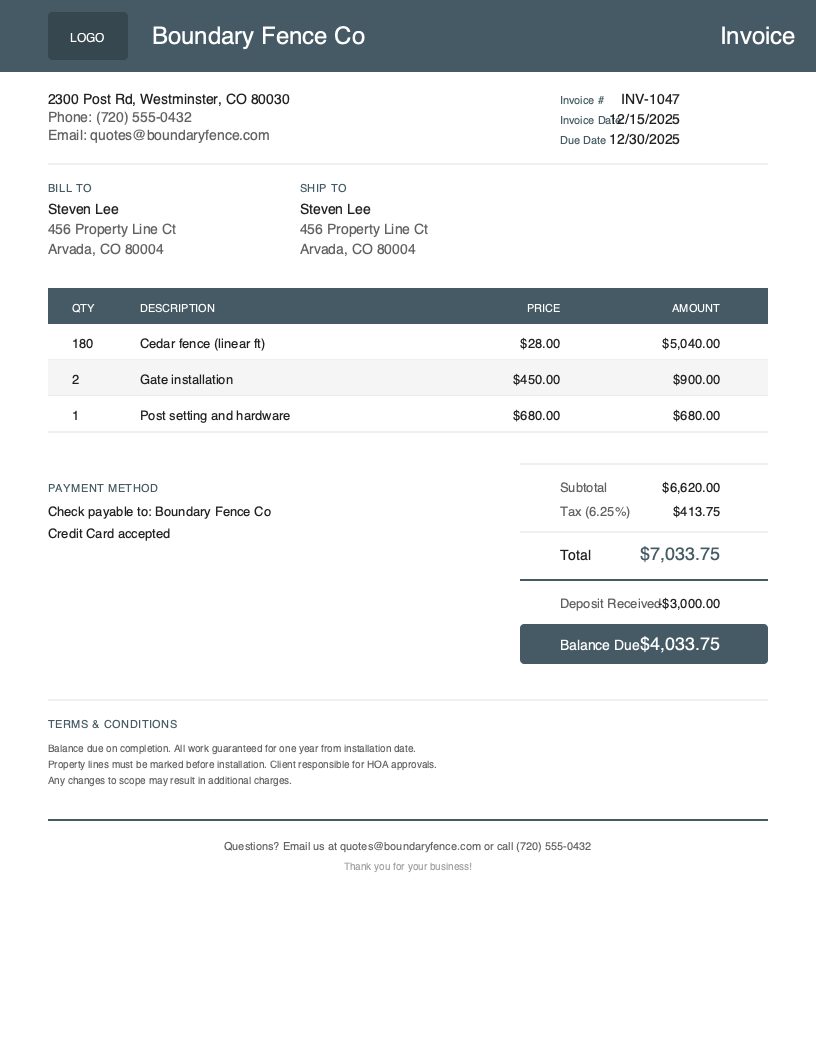
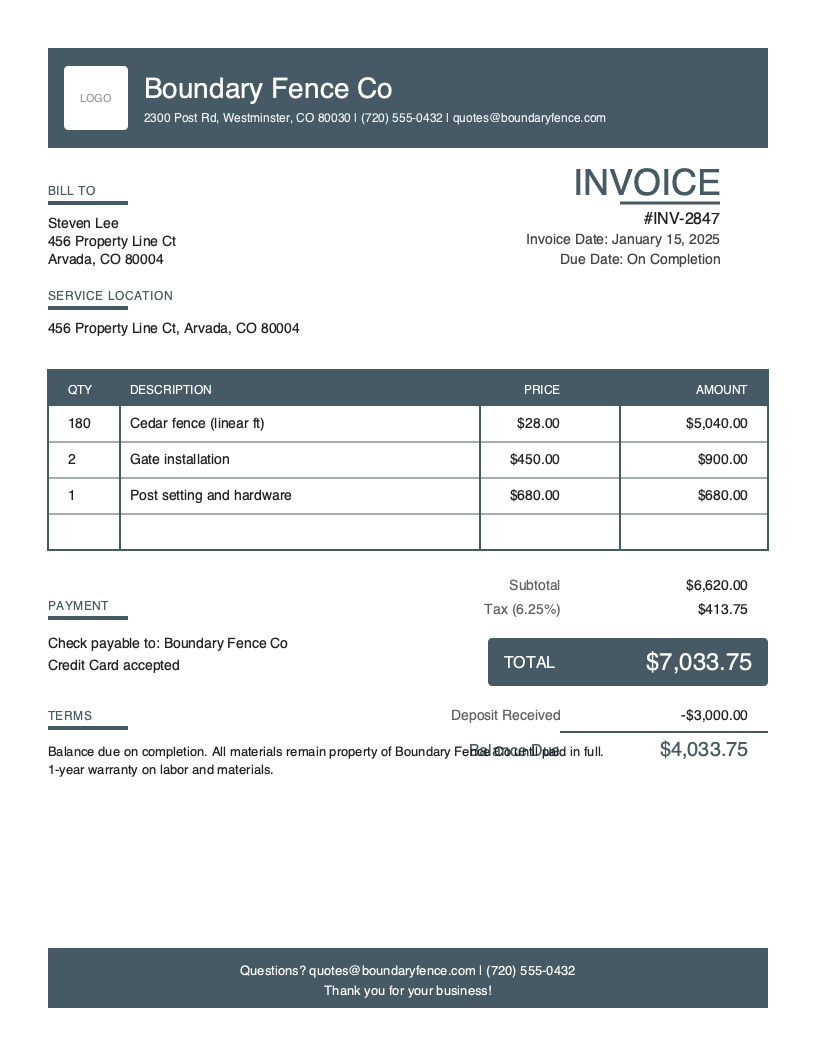
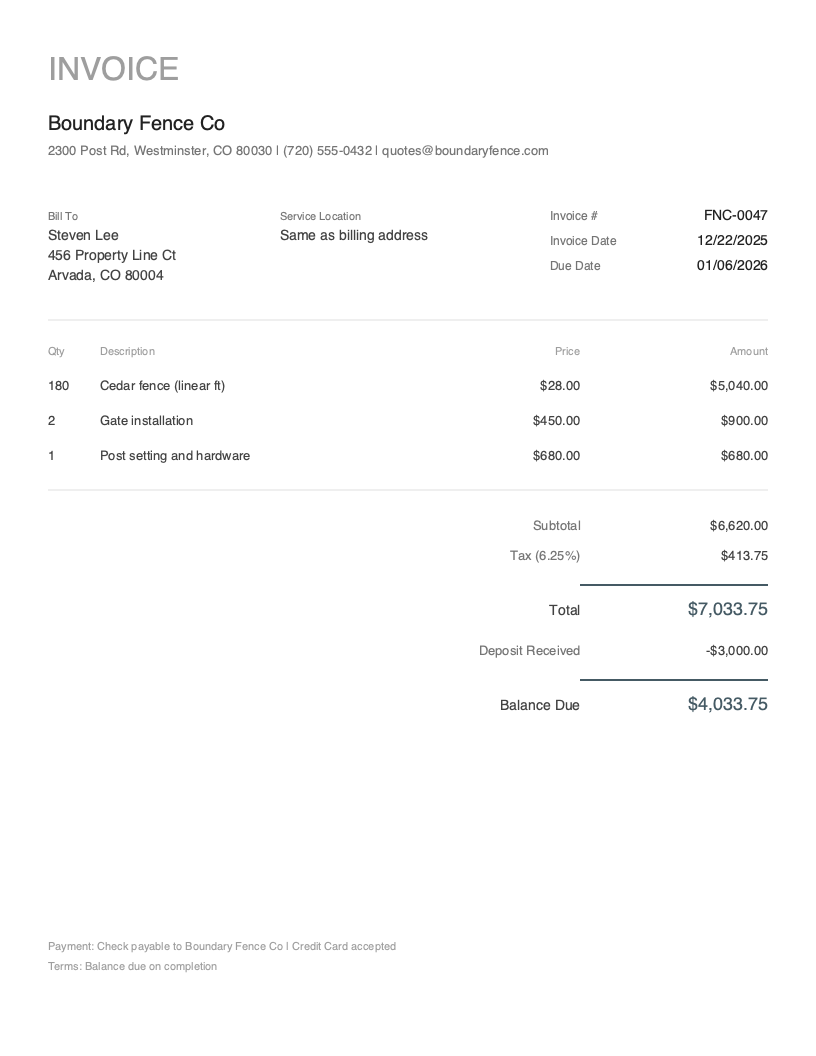
Choose from multiple professional designs. Customize colors, add your logo, and make it yours.
Bold
Bold and branded design
Minimal
Minimal utility look
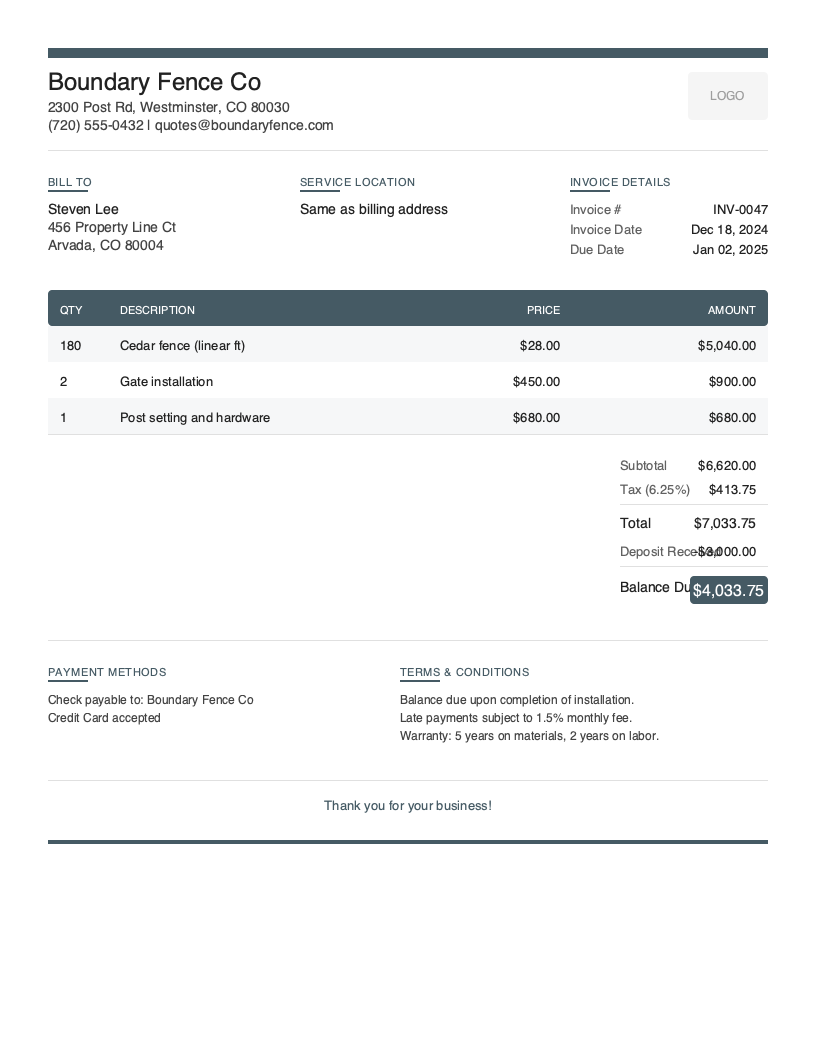
Modern
Clean contemporary style
No signup required. Create and download instantly.
You just finished measuring 200 linear feet of property line for a new vinyl fence installation. The homeowner wants a price before you leave, and you need to account for materials, three gates, corner posts, and concrete. Your truck is parked in their driveway, your hands are dirty from checking soil conditions, and the client is waiting. Creating a professional invoice should not require driving back to the office.
Fencing invoice challenges differ from other trades. You are pricing by linear foot while accounting for gates that require separate calculations, materials that fluctuate weekly in price, and property lines that clients may not have surveyed accurately. Deposits are essential since you are ordering hundreds of dollars in materials before breaking ground. Weather delays can stretch projects across weeks. And you are often working on rural properties or in backyards with poor cell reception.
Poor invoicing practices cost fence contractors money through delayed deposits, disputed measurements, and unclear scope that leads to change orders without additional payment. Your invoice needs to document exactly what was agreed upon, protect you if property line disputes arise, and make it easy for clients to pay the deposit so you can order materials.
What You’ll Find on This Page
- Free downloadable fencing invoice templates (PDF, Word, Excel, Google Docs)
- Essential fields every fence installation invoice needs
- Linear footage pricing and materials tracking best practices
- Deposit and balance payment structures for fence projects
- How to create professional invoices in under 60 seconds from any property
Download Free Fencing Invoice Templates
Get started immediately with our professionally designed fencing invoice templates. Excel and Google Sheets templates include built-in formulas for automatic linear footage calculations, per-foot pricing totals, gate pricing, materials cost with markup, and deposit/balance tracking.
What to Include in a Fencing Invoice
A professional fencing invoice requires specific details that standard invoicing software often overlooks. Your clients need clear documentation of property line work, linear footage measurements, gate specifications, and deposit tracking.
Required Invoice Sections
Invoice Identification - Link to original estimates, permits, and property surveys for project reference.
Business Information - Contractor license, liability insurance, bonding for property work on client land.
Client Information - Property owner billing details and contact information.
Property/Job Site Address - Installation location may differ from billing; required for permits and surveys.
Line Items Breakdown - Separate materials (posts, rails, pickets, hardware), labor, gates, concrete.
Linear Footage - Primary measurement for fence pricing—clear documentation prevents disputes.
Pricing Summary - Per-foot pricing, materials totals, labor, gates itemized, project total.
Tax Information - Materials typically taxed; labor exemption varies by state.
Deposit and Balance - Track 50% deposit received, show remaining balance due at completion.
Payment Methods - Multiple options for large project payments—checks, cards, financing.
Terms and Conditions - Property line disclaimer, warranty terms, permit responsibilities.
Fencing-Specific Fields Explained
Linear Footage - Your invoice should clearly state total linear feet, per-foot price, and how measurements were determined. Document whether measurement is approximate pending final installation or exact based on survey stakes.
Fence Type and Style - Specify style, material, and dimensions: “6-foot cedar privacy fence with dog-ear pickets” or “48-inch chain link with vinyl coating.” Include material grade if relevant.
Gate Details - Gates require separate invoicing. Specify number, width, style (walk gate, drive gate, double swing, sliding), swing direction, and hardware (hinges, latches, locks, drop rods).
Post Specifications - Document post material, dimensions, spacing intervals, set depth, and concrete requirements. Note if corner and gate posts differ from line posts.
Property Line Disclaimer - Include clear language stating fence placement is based on client-identified property lines and client is responsible for confirming boundaries.
Deposit and Balance Tracking - Show total project amount, deposit amount and date received, remaining balance due, and payment due date.
Understanding Fencing Industry Invoicing
The U.S. fencing industry generates approximately $10 billion in annual revenue, encompassing residential, commercial, agricultural, and specialty applications. Residential fencing represents the largest segment.
Cash Flow Considerations - A basic 150-foot residential fence might require $2,000-$4,000 in materials alone—materials you must order before installation. Without proper deposit collection, you risk fronting significant money for clients who delay payment.
Seasonality - Spring and summer represent peak demand. In northern climates, frozen ground limits winter installations. Collecting deposits during busy seasons funds operations during slower periods.
Fencing Invoicing Best Practices
Collect Deposits Before Ordering Materials
Never order materials until you have collected a deposit—typically 50% of the project total. Fence materials represent significant cost: posts, rails, pickets, gates, hardware, and concrete add up quickly. Deposits commit clients and fund your material purchases.
Price by Linear Foot with Clear Breakdown
Quote a clear per-foot rate that includes materials, labor, and standard hardware. Then itemize additional costs separately: gates, corner posts, concrete, tear-out, and special requirements. This transparency helps clients understand value.
Itemize Gates Separately
Gates require additional materials, specialized hardware, and more installation time. Quote gates as separate line items: “48-inch walk gate with hardware - $450” or “12-foot double drive gate - $1,200.” This captures true value and helps clients understand the cost breakdown.
Include Property Line Disclaimer
Add clear language to every invoice stating that fence placement is based on property lines identified by the client, and that the client is responsible for confirming accurate boundaries before installation.
Document Fence Style, Height, and Materials Clearly
Avoid vague descriptions like “privacy fence.” Specify exactly: “6-foot dog-ear cedar privacy fence with 4x4 treated posts, 2x4 treated rails, and standard cedar pickets.”
Specify Post Depth and Concrete Requirements
Document post depth (typically 1/3 of post length below grade), concrete requirements, and any special considerations like rock drilling.
Include Weather Delay and Warranty Terms
Include language allowing for schedule adjustments due to weather. Specify warranty coverage, duration, and exclusions.
Create Fencing Invoices in Under 60 Seconds
Pronto Invoice was built for fence contractors who need to invoice from backyards and rural properties. Our mobile-first approach means you create professional invoices from your phone in five simple steps:
- Select Client - Choose from saved contacts or add new ones in seconds
- Add Line Items - Linear footage, gates, materials with automatic calculations
- Set Payment Info - Deposits, balance due, accepted methods
- Add Project Details - Property address, fence specs, timeline
- Review and Send - Email or print instantly
Features Fence Contractors Need
Offline Capability - Works on rural properties and in backyards with no signal. Everything syncs automatically when you reconnect.
Linear Footage Calculations - Per-foot pricing with automatic totals.
Deposit Tracking - Built-in deposit collection and balance tracking.
Gate and Hardware Catalog - Save commonly-used items for quick entry.
Property Photos - Attach photos directly to invoices.
Materials Markup - Track costs with automatic markup calculations.
Payment Processing - Accept credit cards, ACH, and digital payments. Clients pay deposits instantly.
Fencing Invoicing Best Practices
Collect Deposits Before Ordering Materials
Never order materials until you have collected a deposit—typically 50% of the project total. Fence materials represent significant cost that you should not front.
Price by Linear Foot with Clear Breakdown
Quote a clear per-foot rate including materials and labor, then itemize gates, corner posts, concrete, and tear-out separately for transparency.
Itemize Gates Separately
Gates require additional materials, hardware, and installation time. Pricing gates as separate line items captures their true value and helps clients understand costs.
Include Property Line Disclaimer
Add language stating fence placement is based on client-identified property lines and the client is responsible for confirming boundaries before installation.
Document Fence Style, Height, and Materials
Specify exactly what you're installing: 6-foot dog-ear cedar privacy fence with 4x4 treated posts. Detailed specs prevent disputes about what was agreed upon.
Frequently Asked Questions
A professional fencing invoice should include your business information and contractor license, client details, property address, linear footage with per-foot pricing, fence type and specifications, gate details with individual pricing, post specifications, materials breakdown, deposit received and balance due, payment terms, and property line disclaimer.
Industry standard is 50% deposit before work begins. This covers material costs and commits the client. For projects over $10,000, consider a three-payment structure: 40% deposit, 30% after posts are set, 30% at completion. Never begin work without a deposit.
Gates should be invoiced as separate line items, not included in linear foot pricing. Specify gate type, dimensions, material, and hardware. Example: 48-inch vinyl walk gate with self-closing hinges - $425. Gate installation typically represents 15-25% of residential project value.
Related Invoice Templates
Start Creating Professional Fencing Invoices Today
Join thousands of professionals who use Pronto Invoice to get paid faster. Create your first invoice in under 60 seconds.
This guide is for informational purposes only and does not constitute legal or tax advice.